
The Machine-Readable Shelf: How AI Agents Change Physical Availability

AI agents do not overturn the fundamentals of brand growth, but they do change what it means for a brand to be physically available. In agent-mediated commerce, brands must be easy for machines to identify, retrieve, compare and recommend across retailer feeds, product pages, reviews and fulfilment systems, or they risk losing demand before a consumer ever sees the choice.
Last week I let a piece of software choose my biscuits. Grab, the “everything platform” here in Singapore, recently launched a “grocery assistant” that fills your GrabMart cart from a simple request.
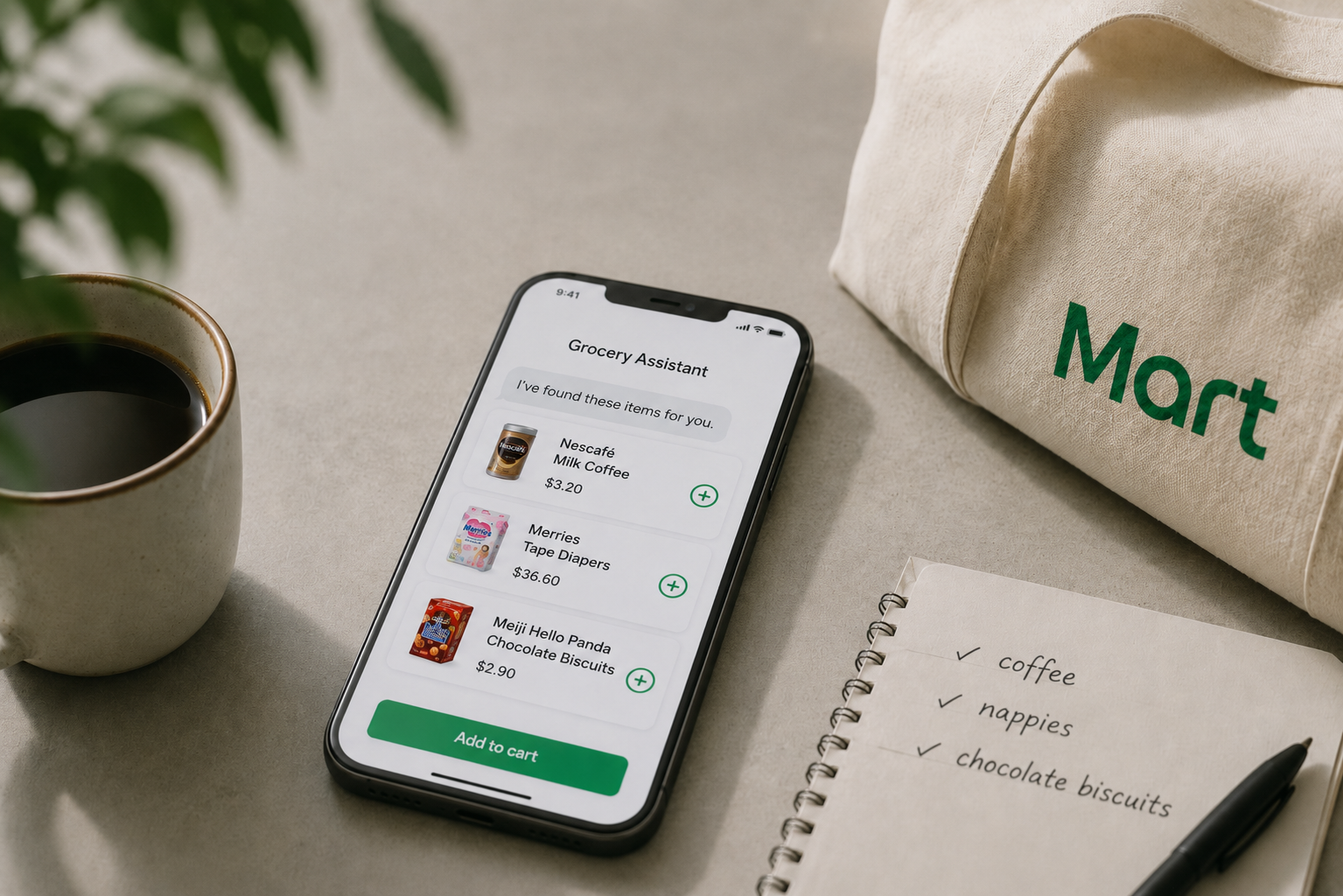
I gave it a go and asked for some essentials: baby diapers, coffee and chocolate biscuits. A minute later a cart was waiting for my approval: Nescafe milk coffee, Merries diapers and Meiji Hello Panda chocolate biscuits.
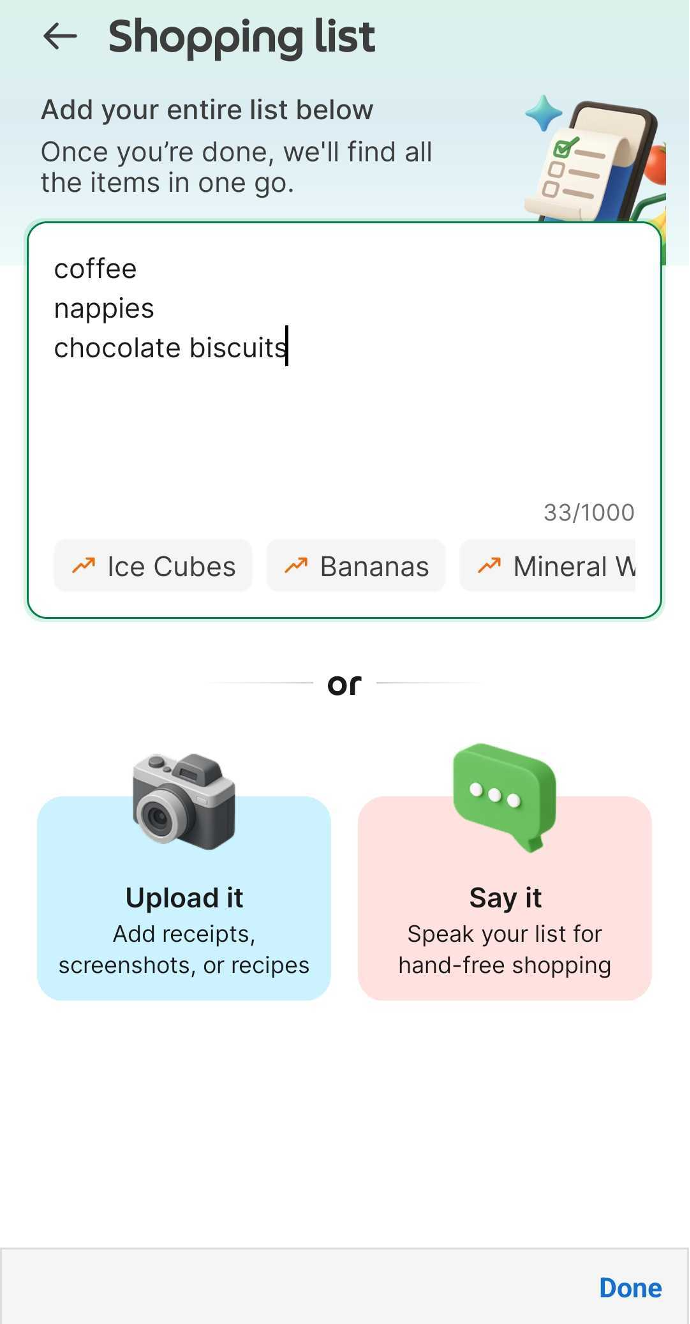
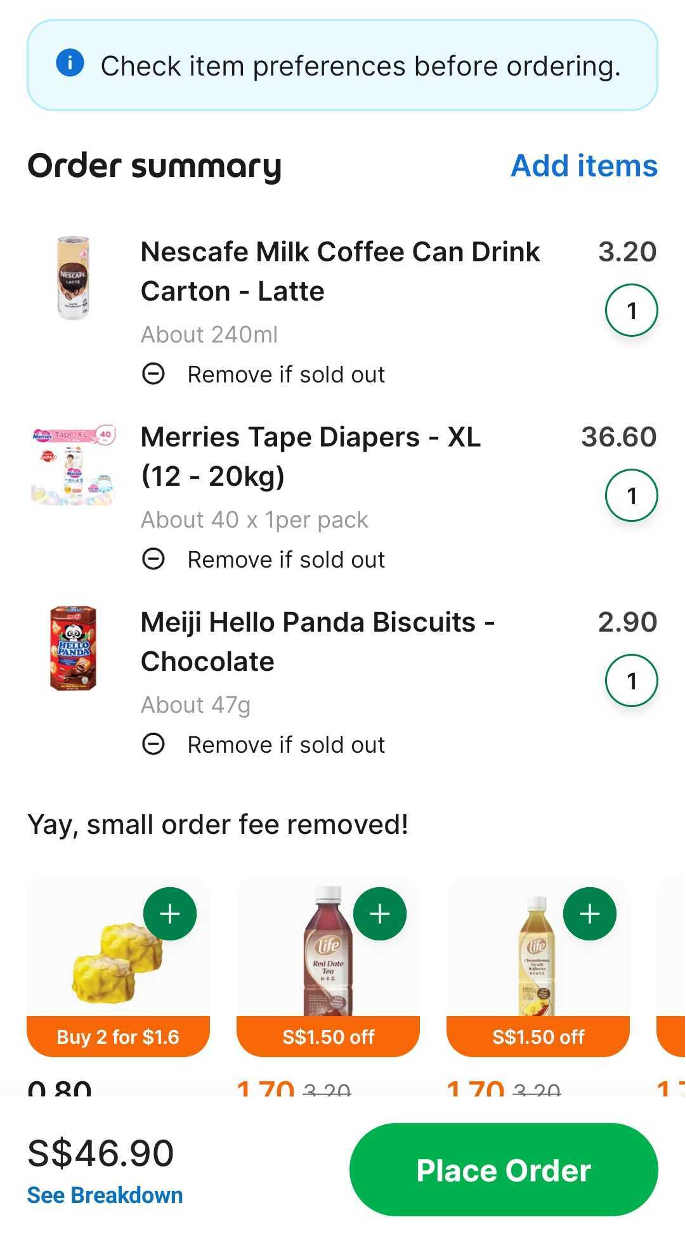
It was all quite straightforward, and quietly impressive. But none of them were my regular choices or brands, which raises the fundamental question this article is about.
Of all the chocolate biscuits the agent could have chosen, why did Meiji’s Hello Panda Chocolate Biscuits end up in the cart and not my usual McVitie’s Dark Chocolate Digestives?
AI agents are new intermediaries, but they don’t require a new theory of growth
New technology tends to invite one of two conclusions from marketers.
Either everything has changed and brand growth needs rethinking from scratch, or nothing much has changed and we can all carry on as before.
McKinsey’s State of the Consumer 2026 suggests “everything is changing”. The report describes how social media, search and generative AI are combining into a more technology-driven path to purchase, with brand influence spread across more touchpoints. Its analysis of large language models is striking: for CPG brand queries, brand-owned websites accounted for only 1–2% of what the models cited. Almost everything else came from retailers, publishers, reviews and competitors.
And yet the same report finds that consumers still trust generative AI less than established research sources. The evidence points both ways at once, and neither easy conclusion quite fits.
When it comes to brand growth, my North Star is the work of the Ehrenberg-Bass Institute, whose thinking Byron Sharp popularised. It tells us that brands grow through mental availability and physical availability.
“For CPG brand queries, brand-owned websites accounted for only 1–2% of what the models cited.”
Physical availability (that is, being easy to buy) has always involved intermediaries. A shopper asks a pharmacist what to take for a cold. A broker recommends a mortgage. A detergent is at eye level in the supermarket aisle. A company gets chosen because it sat near the top of a Google search. In each case an intermediary frames the choices available to meet the consumer’s need.
AI agents sit in that lineage. They search, filter, compare, summarise and, increasingly, act. The intermediary is not new. The way it nudges consumers into a decision is.
That is the argument of this piece: AI agents do not change the laws of brand growth. They do, however, change some of the work required to be physically available.
What is new is the way the intermediary reads the market
A brand can buy its way onto a supermarket shelf: it can brief the category manager, literally pay for space on a shelf that is at eye level and then send someone to check the display.
An AI agent’s shelf is assembled on the spot, from product data, retailer pages, reviews, comparison sites, price and delivery, platform rules, and often the consumer’s own purchase history.
In the context of agentic AI, what the agent reads is, in effect, its shelf. A brand that is poorly described, inconsistently priced or thinly reviewed is, to an agent, barely stocked at all.
The catch is that most of that shelf is not the brand’s to arrange. The retailer owns the feed. Customers write the reviews. Comparison sites set the frame, platforms set the rules, and the model decides what to retrieve and repeat.
While a brand can influence all of these, with better data, better service and better content, it has less direct control over any of them.
While physical availability used to be something a brand could largely buy, a part of it now has to be earned, continuously, in places the brand does not own.
Most of what an agent knows about a brand lives outside its own channels: with retailers, publishers, reviewers, comparison sites and competitors. Purchases, meanwhile, increasingly complete inside retailer AI tools rather than on brand sites. The biscuits in my cart were chosen exactly that way: inside Grab, with no brand website in sight.
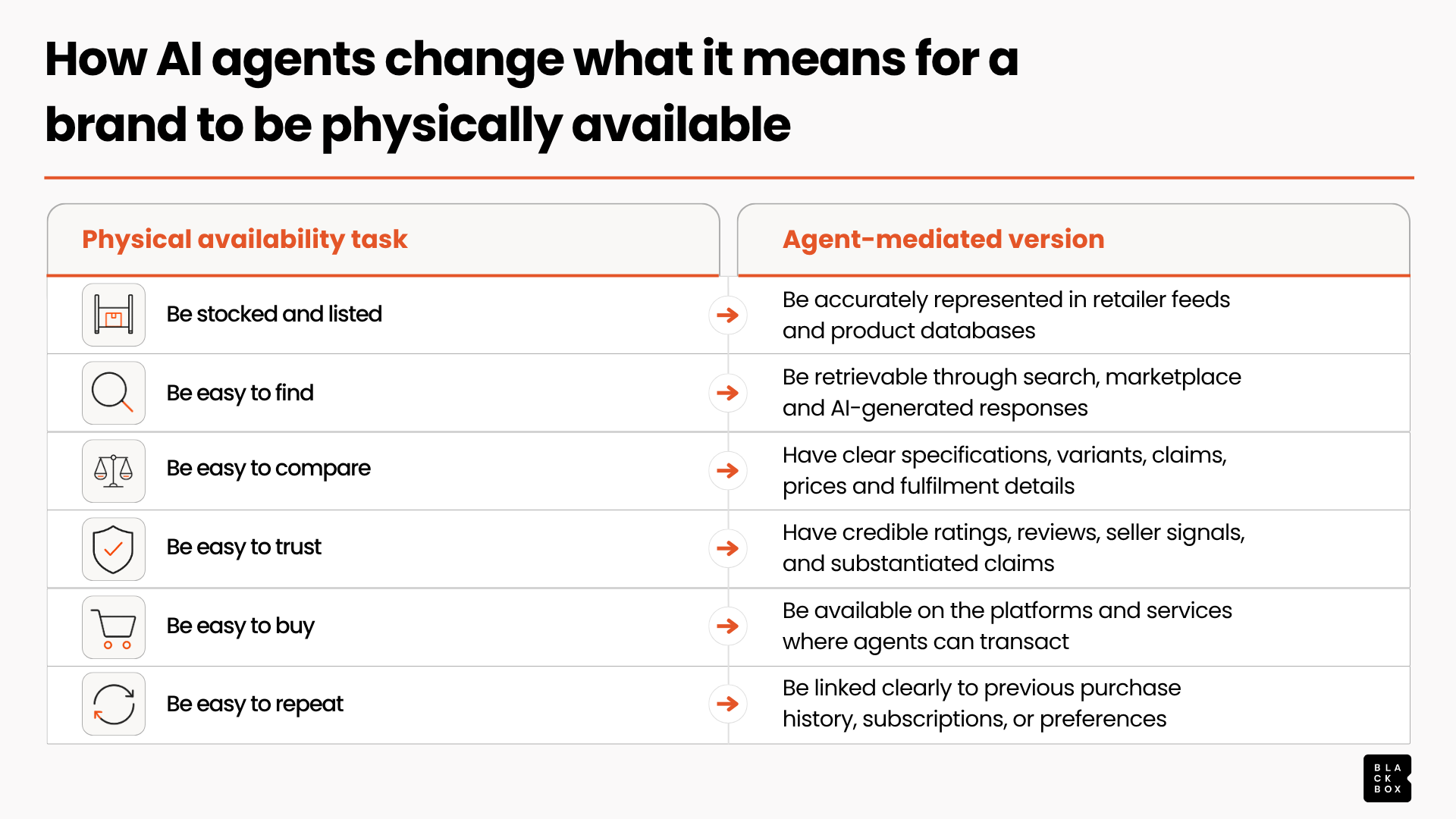
Owned channels are not irrelevant. They are simply not enough: the machines are reading the market, not just the brand website. In practice, being easy to buy now means being easy for an agent to identify, retrieve, compare and recommend:
Consumer Instructions Decide Which Brands AI Agents Choose
Agents will matter most where consumers already seek advice or comparison: travel, insurance, healthcare, electronics. But everyday categories are not immune. The difference is not whether agents enter the category, but what consumers ask them to do.
Our Sumsub-commissioned survey of 1,050 consumers across mainland China, Hong Kong and Taiwan asked what an agent should do when buying a consumer’s usual product. The answers split almost evenly three ways: loyalty has become an instruction, and each instruction creates a different winner. “Buy my usual” rewards memory; “find the cheapest” rewards comparability; “use my preferred platform” rewards ecosystem presence.
Put the chocolate biscuits back on the table. One household’s agent hunts down a cheaper biscuit, another’s buys Hello Panda at the best price, a third’s takes whatever the usual platform makes easy. Same biscuit, three different contests. A brand cannot prepare for “the agent” in general. It has to know which instructions its buyers give, and whether it wins under each one.
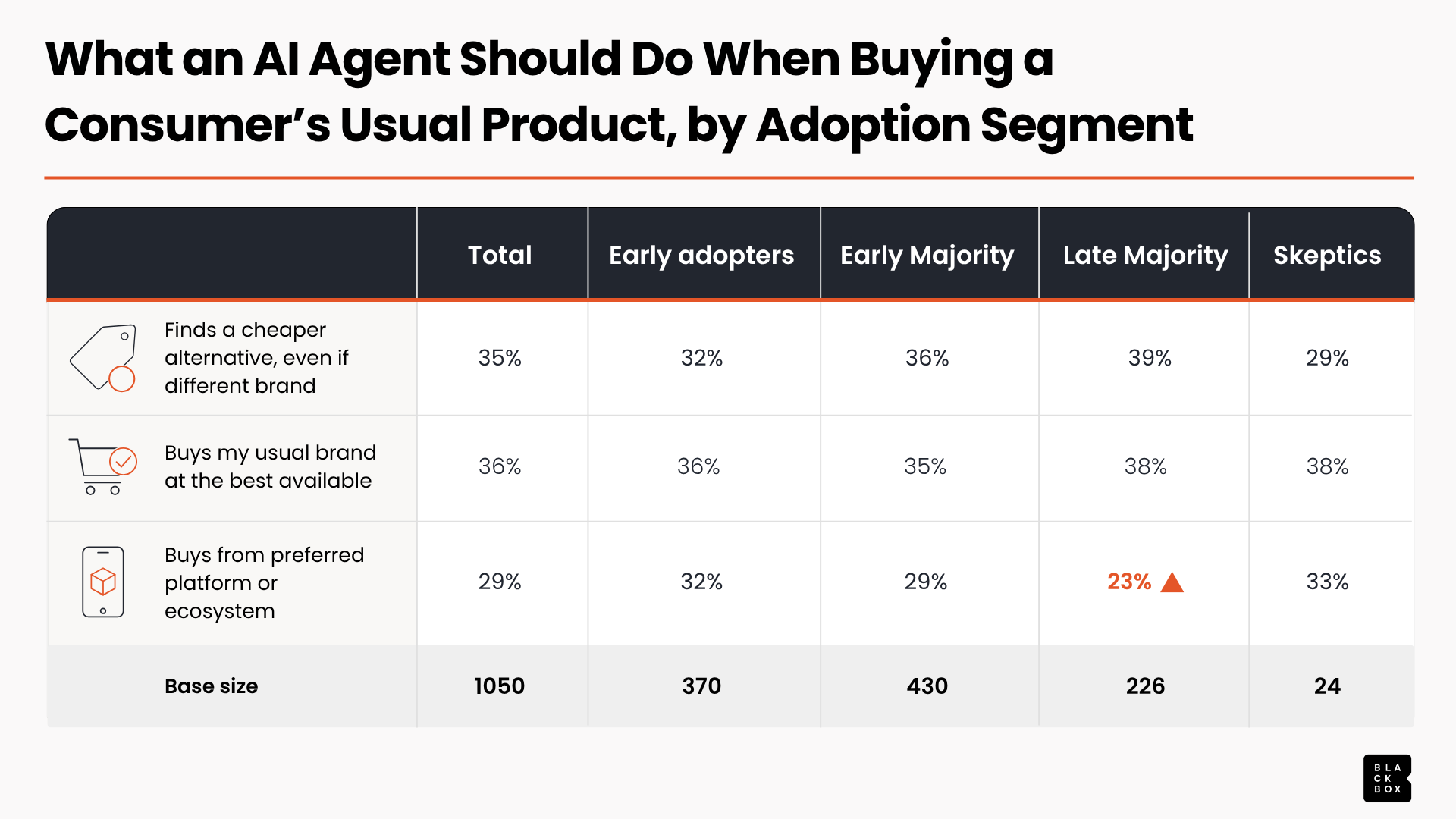
Source: Blackbox–Sumsub study. Sample total n=1,050. Skeptics n=24. Consumers across mainland China, Hong Kong and Taiwan. ▲/▼ = significantly higher/lower than Total at 95% confidence.
Brand still matters, and it shapes what brands should do now
If agents now sit between intention and purchase, a tempting conclusion follows: the brand’s job is to persuade the algorithm. That is probably the wrong frame. Brand still shapes what consumers ask for and what agents retrieve, and mental availability has not gone anywhere; it just has to be matched in the data the agent reads.
The reading of the market has been automated, but the final say has not: our previous piece found more than three-quarters of consumers prefer human approval before an agent acts, and platform rules decide where agents can transact at all. A brand can be legible to the machine and still fail the approval moment.
So the practical response is not to chase every AI tactic, but to treat agents as a new intermediary in the old availability problem:
First, audit how agents describe the brand under prompts like “best”, “cheapest” and “usual brand”.
Second, treat product data, pricing, stock and ratings as distribution infrastructure.
Third, know which instructions the brand can win: a premium brand may lose “cheapest” but win “most trusted”.
Fourth, manage the retailer content, reviews and comparison sites that agents retrieve and repeat.
Fifth, keep human reassurance visible; approval is what makes delegation safe enough to try.
This is not a new discipline. It is the old work of being easy to buy, done partly in places the brand does not own, and judged twice: by the machine, then by the human. Brands that are easy for people to remember but difficult for agents to identify may leak demand at the point of execution.
Which brings us back to the chocolate biscuits. Hello Panda did not end up in my cart by charming anyone. It was in the retailer’s feed, clearly described, credibly rated and in stock for delivery. My usual McVitie’s, for whatever reason, was less legible to the machine. None of that is glamorous. All of it is availability.
The task today is both old and new: be memorable to people, available in market, and clear enough for the intermediaries that now sit between intention and purchase.
Blackbox In Action
Blackbox supports organisations through an AI-Mediated Physical Availability Diagnostic, showing where a brand is easy or difficult for agents to recognise, retrieve, compare and recommend.
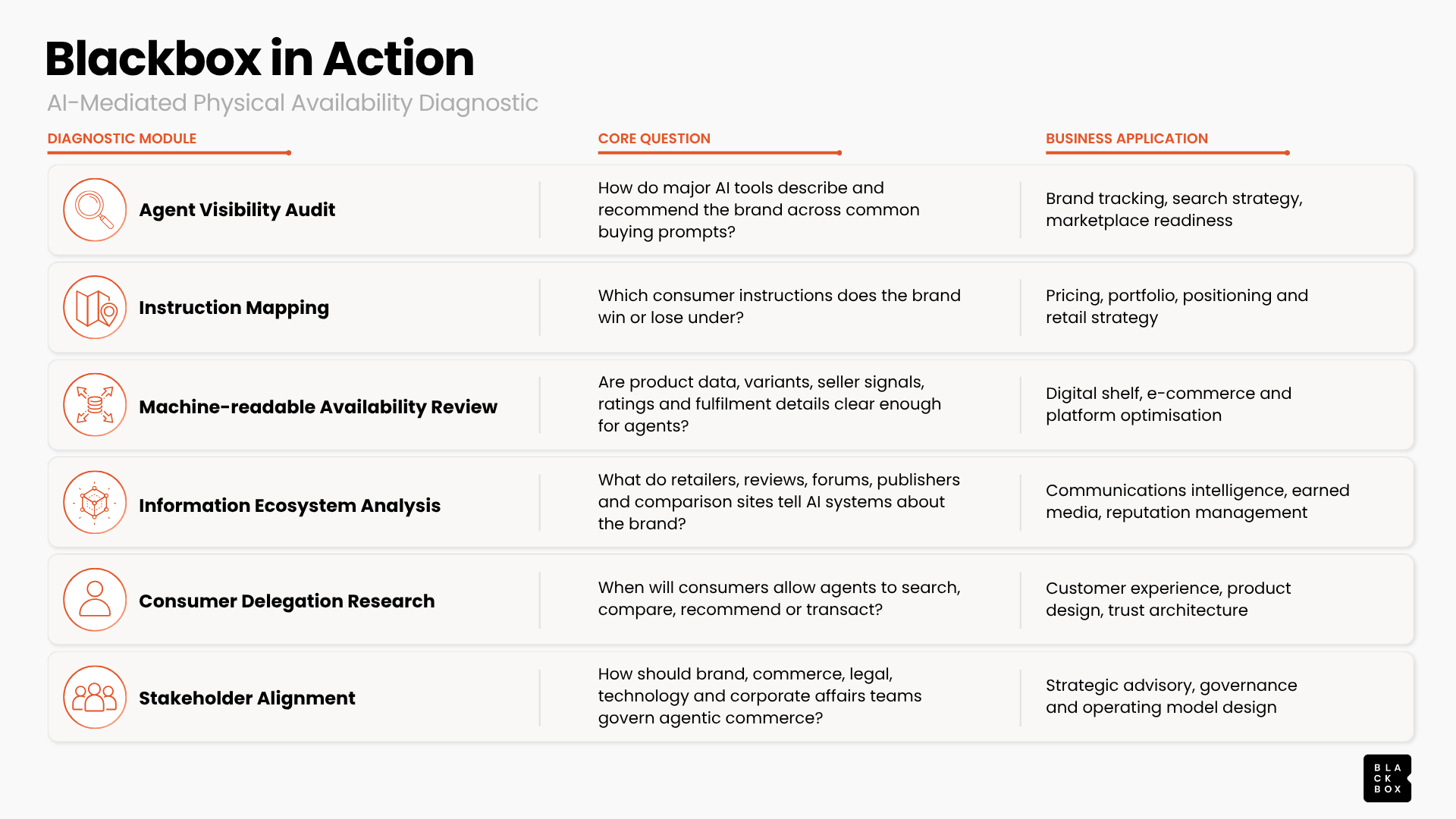
This is the final article in our three-part series on consumer relationships with Agentic AI. Across the series, we have traced the journey from adoption, to trust, to the moment AI agents begin shaping what consumers buy and which brands remain visible, available and chosen.
Click here to read part one - Are AI Agents Rewriting the Consumer Adoption Curve?
Click here to read part two - The Delegation Contract: How Consumers Structure Trust in AI Agents
Ready to Make Agentic AI Work for You?
Reach out to Blackbox for a conversation on how our research solutions can help you build, market or regulate agentic products more effectively.