
SensingSG Q2 2026 Briefing: Economic Rebound Underway, But Yet to Reach Every Household
Singapore’s economic sentiment recovered in Q2 2026, but improvements in the national outlook have yet to translate fully into household financial security. For policymakers and businesses, the findings point to a resilient public that remains confident in Singapore’s direction while judging economic progress increasingly through affordability and everyday expenses.
Financial expectations rebounded in Q2 2026
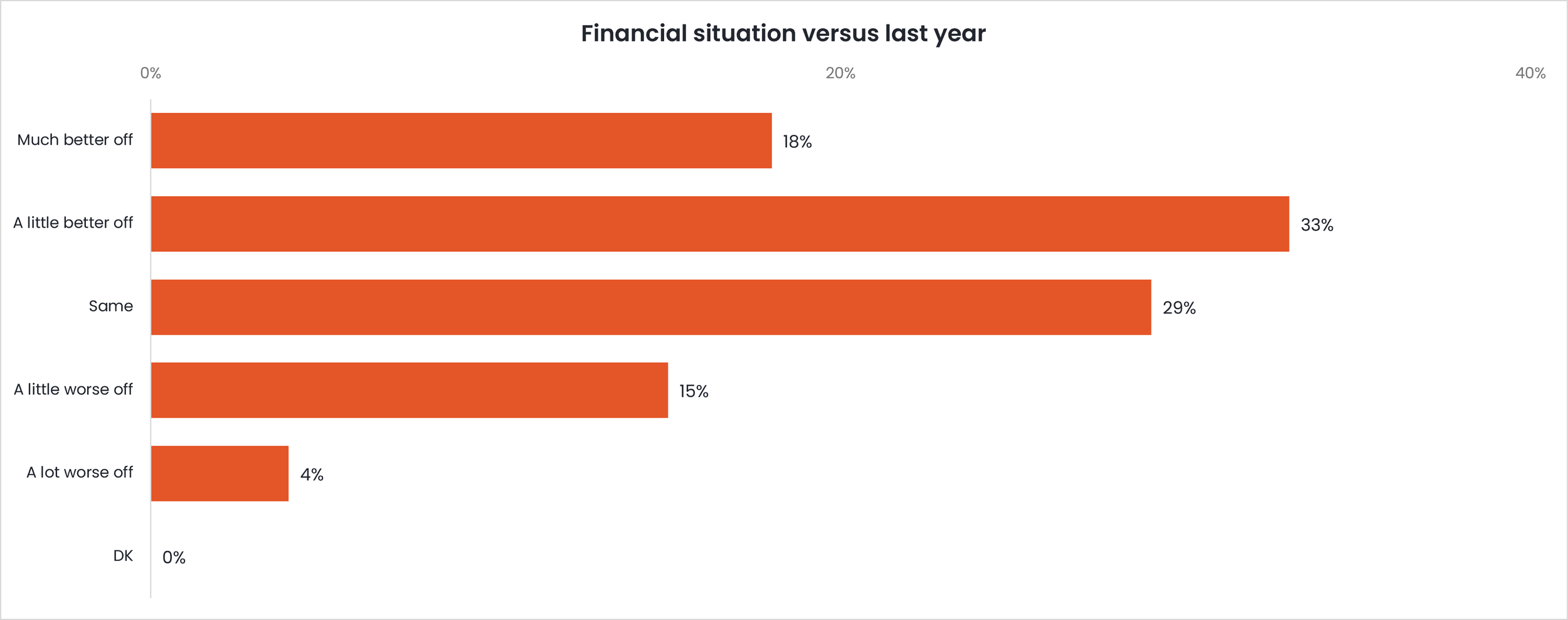
SensingSG recorded a clear recovery in household economic sentiment following the softer readings of Q1 2026. The proportion of Singaporeans who feel financially better off than a year ago rose five percentage points to 51%, while 59% expect their family finances to improve over the next 12 months, an increase of seven points.
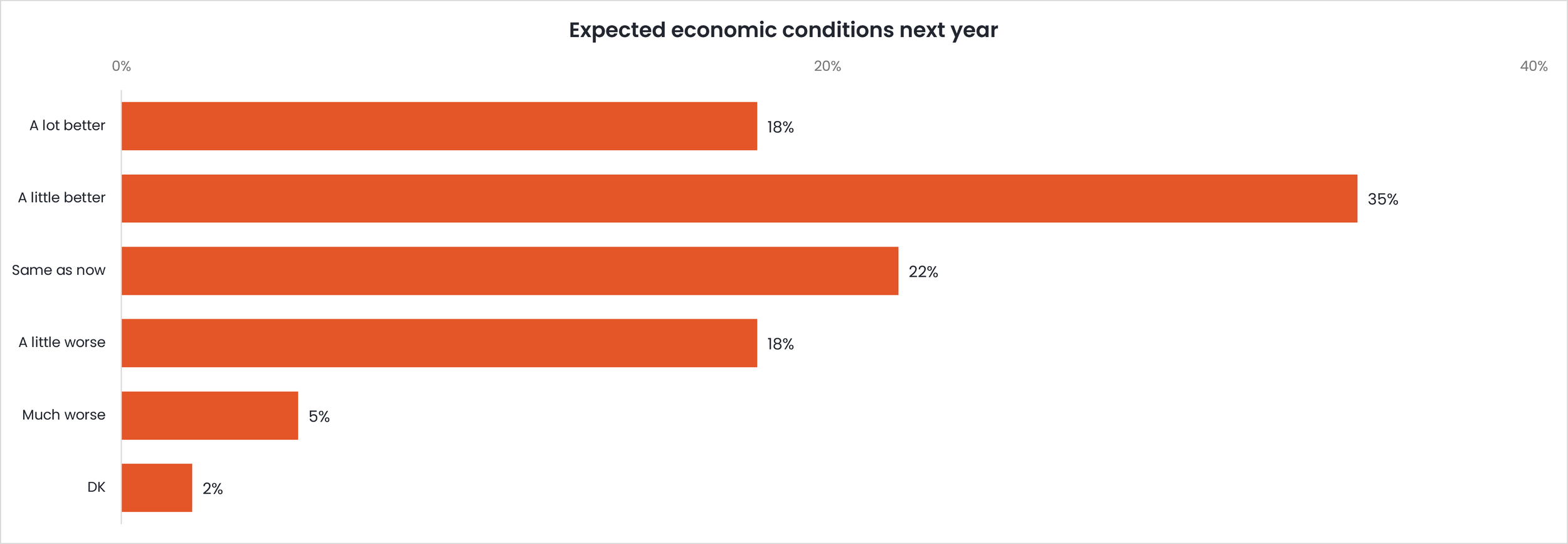
Expectations for the wider economy moved in the same direction. Fifty-three per cent now expect Singapore’s economic conditions to improve, compared with 23% who anticipate a deterioration. Public assessments of the current economy also strengthened, rising three points to 84%.
Economic sentiment indicators (Q2 2026 results)
Financially better off than a year ago: 51% (+5 points from Q1 2026)
Expect family finances to improve next year: 59% (+7 points from Q1)
Expect the national economy to improve: 53% (+10 points from Q1)
Positive assessment of the current economy: 84% (+3 points from Q1)
Positive assessment of current personal finances: 77% (unchanged from Q1)
The direction of travel is encouraging. Singaporeans are more optimistic about what comes next, both for their families and the national economy.
Yet personal sentiment continues to trail the national picture. While 84% rate the current economy positively, only 77% say the same about their personal finances. That seven-point gap captures one of the defining features of the current recovery: people can recognise that the economy is performing well without feeling that the pressure on their own household budgets has eased to the same extent.
The recovery remains weaker when viewed year on year
Quarter-on-quarter improvements also need to be read alongside the longer-term trend. The 51% who feel financially better off than a year ago remains below the 57% recorded in year-on-year tracking, while the proportion feeling worse off has increased from 15% to 20%.
Personal financial confidence is similarly five points lower than the equivalent period last year. Forward expectations may have rebounded, but households have not yet regained the financial confidence recorded 12 months earlier.
This suggests that Singapore is experiencing a recovery in outlook before a full recovery in lived experience. People may expect conditions to improve while continuing to absorb the cumulative effects of earlier price increases.
Lower inflation does not mean that groceries, utilities, transport or housing have returned to previous price levels. It means those costs are rising more slowly. For households managing recurring expenses, that distinction is immediate and tangible.
Singaporeans remain confident in the country’s direction
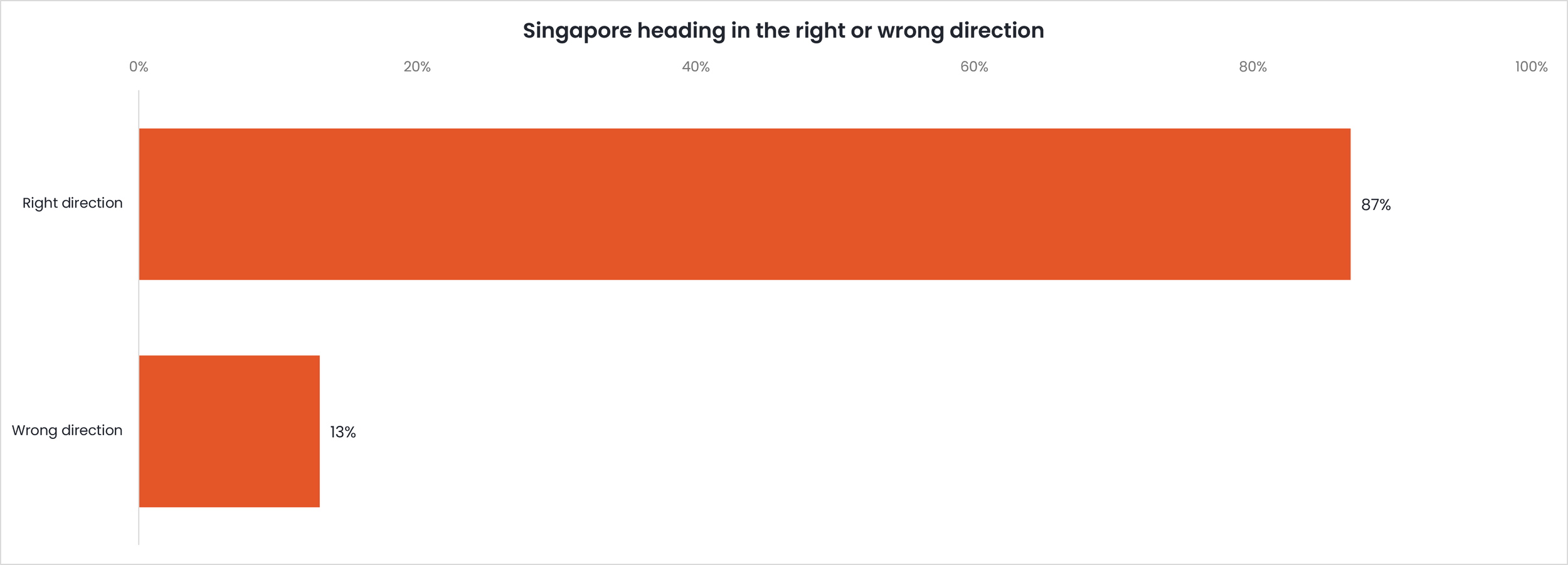
Importantly, household pressure has not translated into broad pessimism about Singapore. Eighty-seven per cent believe the country is heading in the right direction, compared with 13% who say it is moving in the wrong direction.
SensingSG data, Jul 2026, n=1533, nationally representative sample of Singaporeans and PRs, 21+.
That remains a decisive endorsement, although positive sentiment has eased from 89% in Q1 2026 and 90% in the year-on-year tracking. The decline is modest, but its consistency suggests that public confidence should not be taken for granted.
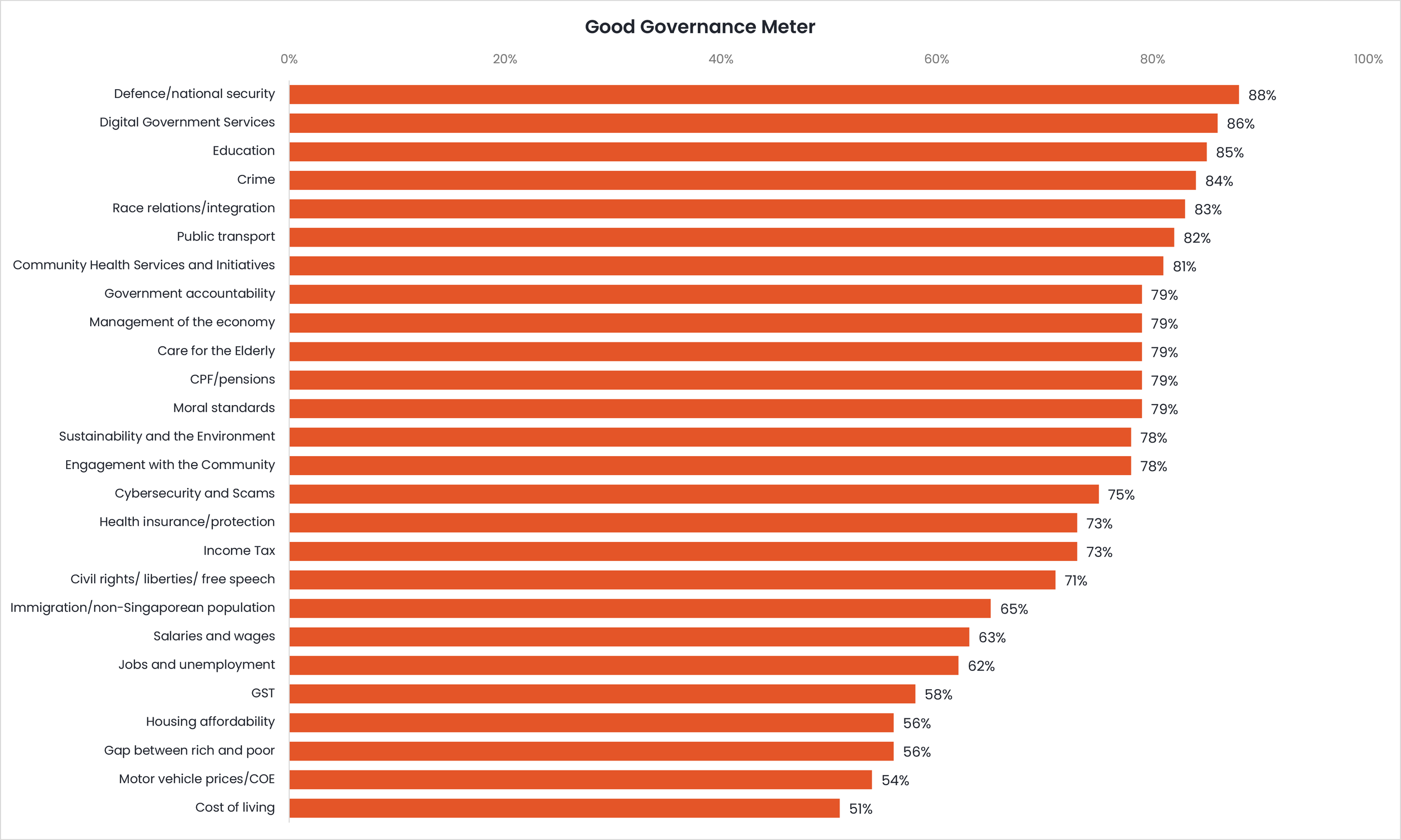
Overall perceptions of good governance remain strong at 73%, unchanged from Q1 and two points higher year on year. Singaporeans give particularly high ratings to defence and security at 88%, digital government services at 86%, education at 85%, crime management at 84% and race relations at 83%.
These findings reveal a public that continues to trust Singapore’s institutions and recognise competence across many areas of government. The weaker scores are concentrated around affordability rather than institutional performance as a whole.
And how would you rate the Singapore Government’s current performance on each of these issues?
SensingSG data, Jul 2026, n=1533, nationally representative sample of Singaporeans and PRs, 21+.
Affordability is the clear exception to strong governance ratings
Cost-of-living performance receives the lowest rating among the areas tracked, at 51%. Vehicle prices and the Certificate of Entitlement system follow at 54%, while housing affordability and the rich–poor gap both stand at 56%.
The cost-of-living rating recovered five points from Q1 2026, indicating that recent relief or improving conditions may be registering with households. Nevertheless, it remains below the year-on-year result and sits far beneath the ratings given to most other areas of government performance.
This creates an important distinction for policymakers. Singapore does not face a general crisis of confidence in governance. It faces a more concentrated test of whether strong administration and economic management are producing sufficiently visible improvements in household affordability.
The figures suggest that Singaporeans are capable of holding both views simultaneously: the system works, but daily life remains expensive.
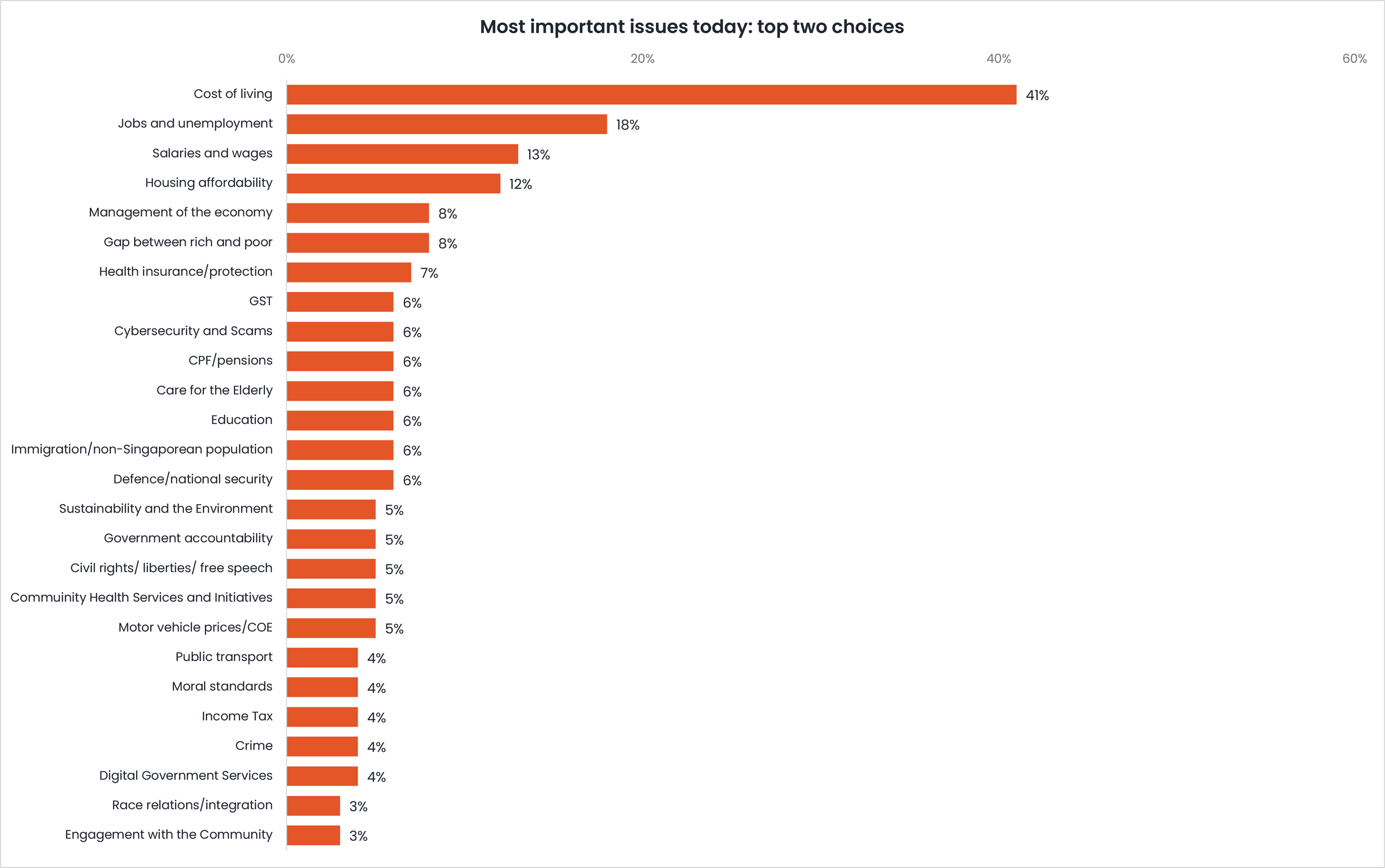
Which of the following national and community issues would you say are most important to you TODAY? Select your most important and second most important. [RANK 1 AND 2]
SensingSG data, Jul 2026, n=1533, nationally representative sample of Singaporeans and PRs, 21+.
Household costs dominate public attention
The stories Singaporeans followed most closely reinforce this conclusion. Electricity and gas price increases attracted the interest of 82% of respondents, making household costs the dominant news story of the quarter.
That placed utility prices well ahead of the United States–Israel–Iran conflict at 69% and the FIFA World Cup at 65%. Political and labour developments formed the next tier, with Pritam Singh’s re-election and the issue of unpaid migrant workers each attracting 62% interest.
The attention given to utility prices is revealing. Amid geopolitical conflict, domestic politics and major international events, the story that resonated most strongly was one with a direct bearing on monthly household expenditure.
For policymakers, this underlines the importance of communicating economic support through its practical effect on recurring costs. The public is likely to judge measures such as rebates, vouchers and transfers according to whether they create a noticeable difference in household finances, rather than their headline monetary value alone.
Businesses should expect cautious confidence from consumers
For enterprises, stronger forward sentiment provides grounds for measured optimism. However, it should not be interpreted as an immediate return to less disciplined spending.
Consumers who expect their finances to improve may still remain highly attentive to price, value and necessity. Clear pricing, practical product tiers, loyalty benefits and credible value propositions are therefore likely to matter more than broad appeals to economic optimism.
The same principle applies to employers. Wage progression, predictable working arrangements and benefits that offset recurring household expenses can influence employees’ sense of financial security. In a labour market where household pressures remain salient, the perceived value of employment extends beyond base salary alone.
Wait, there’s more…
View the fully interactive and freely accessible SensingSG dashboard here (desktop/laptop only).
Read our additional deep-dive briefing on Singaporeans’ relationship with tech and AI