
SensingSG: Why Singapore’s Hawker Culture is Facing an Existential Threat
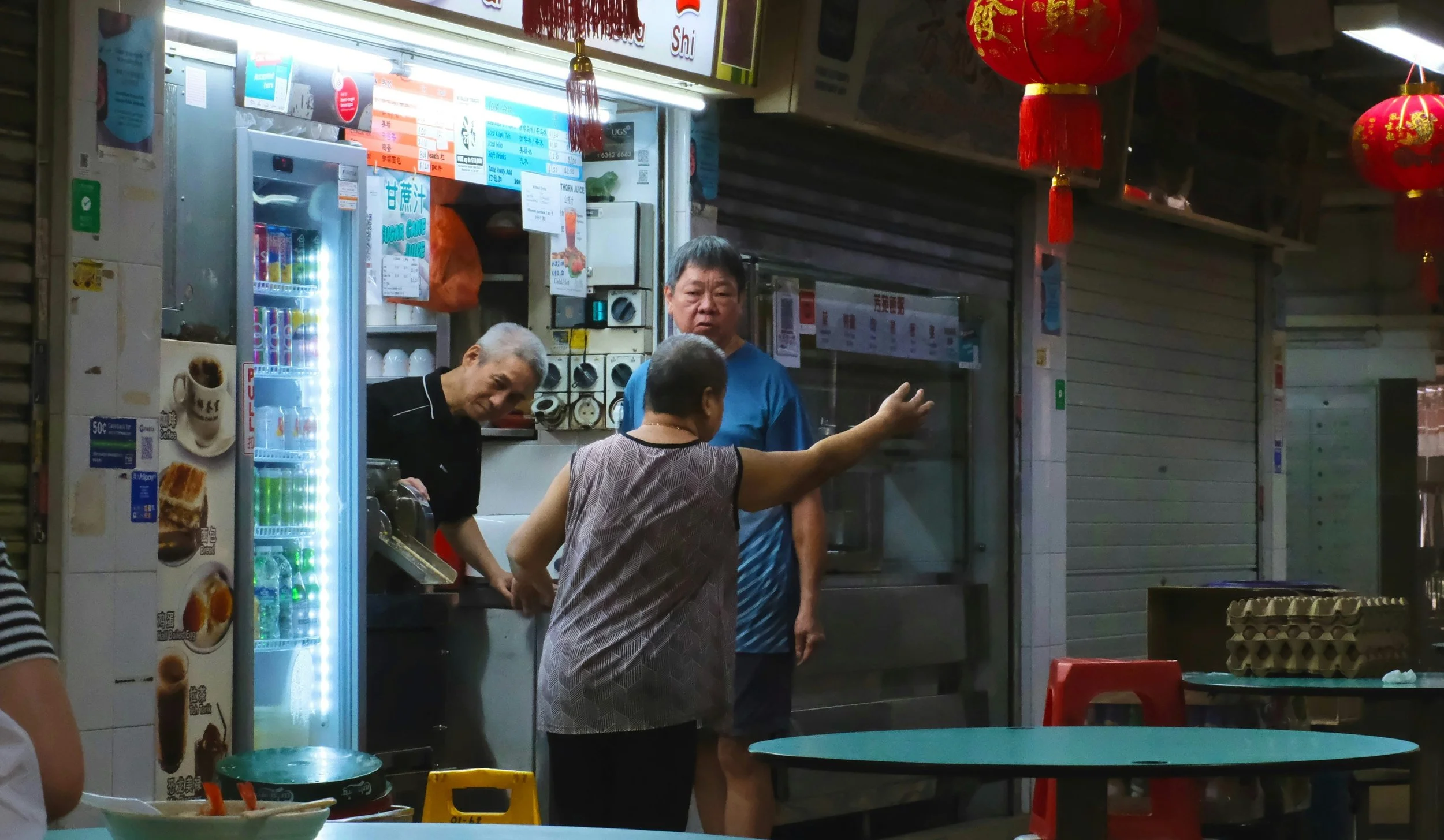
Blackbox’s latest SensingSG data confirms that hawker culture is seen as part of what it means to be Singaporean, with 95% of the population saying it is important to their everyday life. However, this heritage now faces an existential crisis driven by long-term structural decay and the immediate volatility of the post-Iran war energy landscape.
The Essential Cultural Anchor
Singapore’s hawker scene is a UNESCO-recognised heritage that serves as a global benchmark for high-quality, affordable urban dining. Internationally renowned for its accessibility, it remains one of the few places where a Michelin-level meal costs less than a coffee in London or New York.
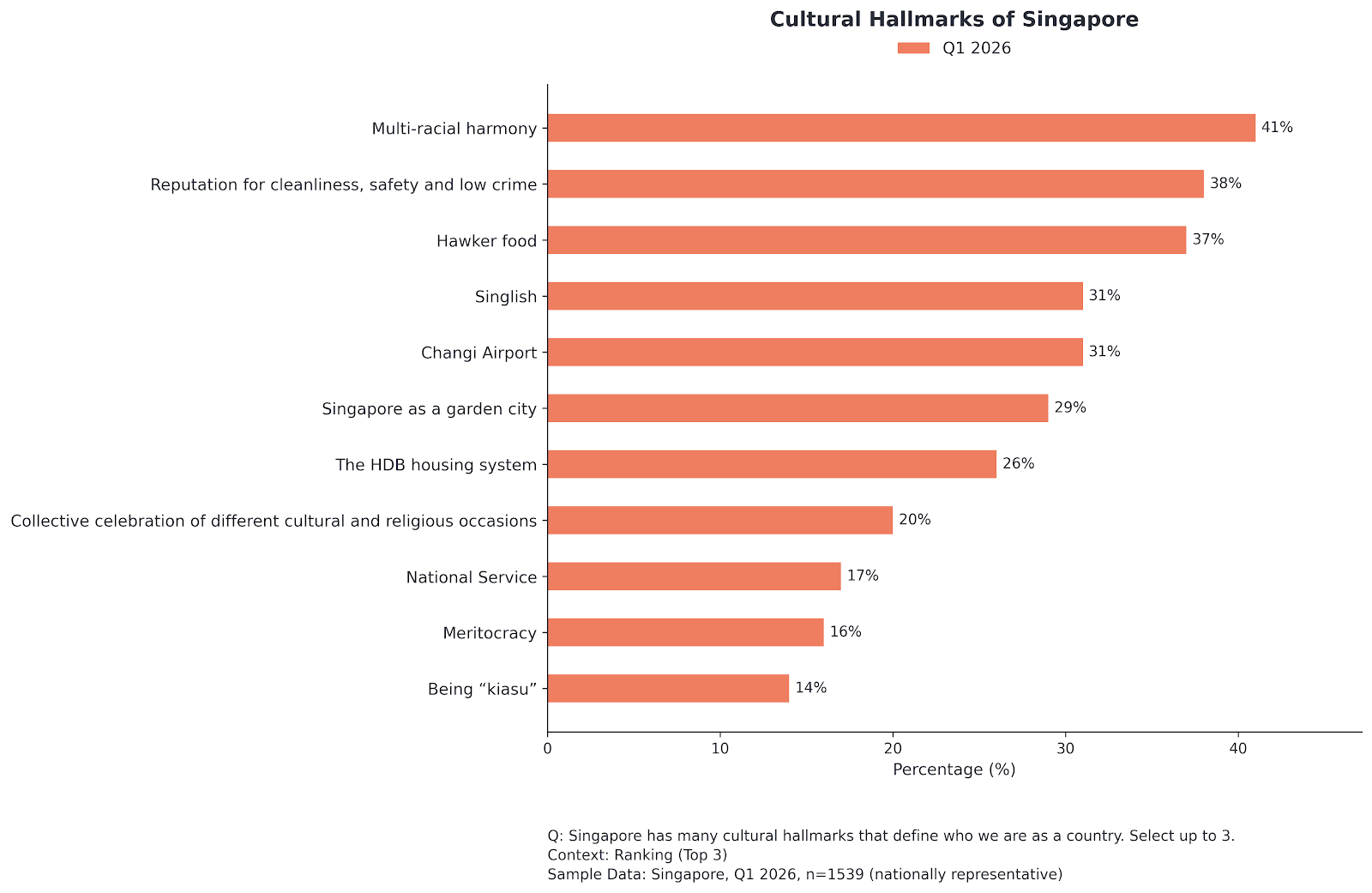
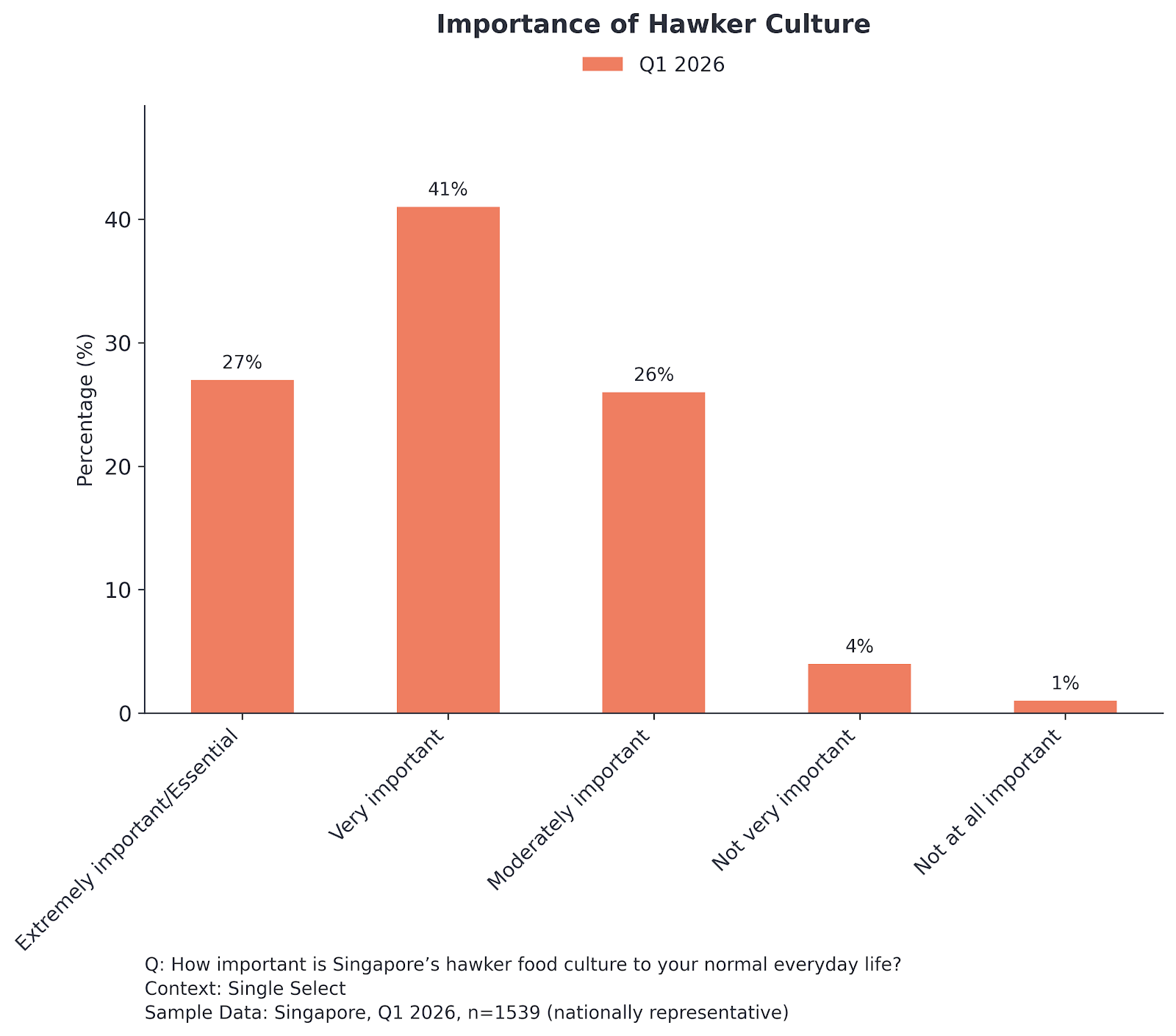
Our Q1 2026 SensingSG data (n=1,539; general population) finds that nearly all Singaporeans (95%) view hawker food as important to their everyday lives. More significantly, seven-in-ten (69%) categorise it as "very important" or "essential". It is a core cultural trait that sits at the very top of what it means to be Singaporean, ranked as the third most defining hallmark of the nation, behind only Singapore’s reputation for order and multiracial harmony.
The kopitiam goes far beyond mere culinary preference; for many, it is a matter of economic survival. 43% of Singaporeans explicitly state they could not maintain their current lifestyle without regular access to hawker food at its current price points. For these residents, affordable hawker meals remain one of the few last bastions of protection against the rising cost of living from becoming untenable.
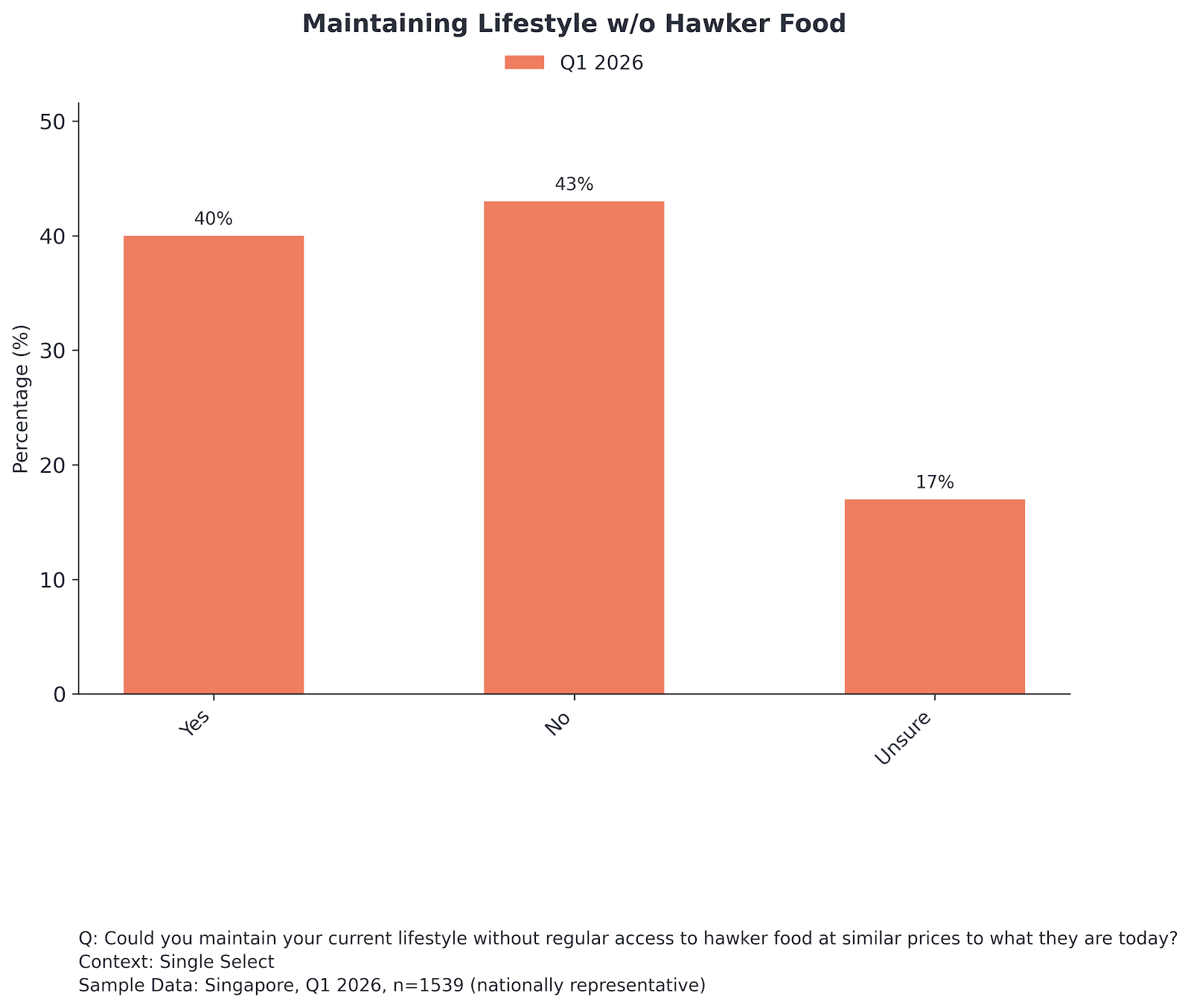
“43% of Singaporeans explicitly state they could not maintain their current lifestyle without regular access to hawker food at its current price points.”
An Uncertain Future
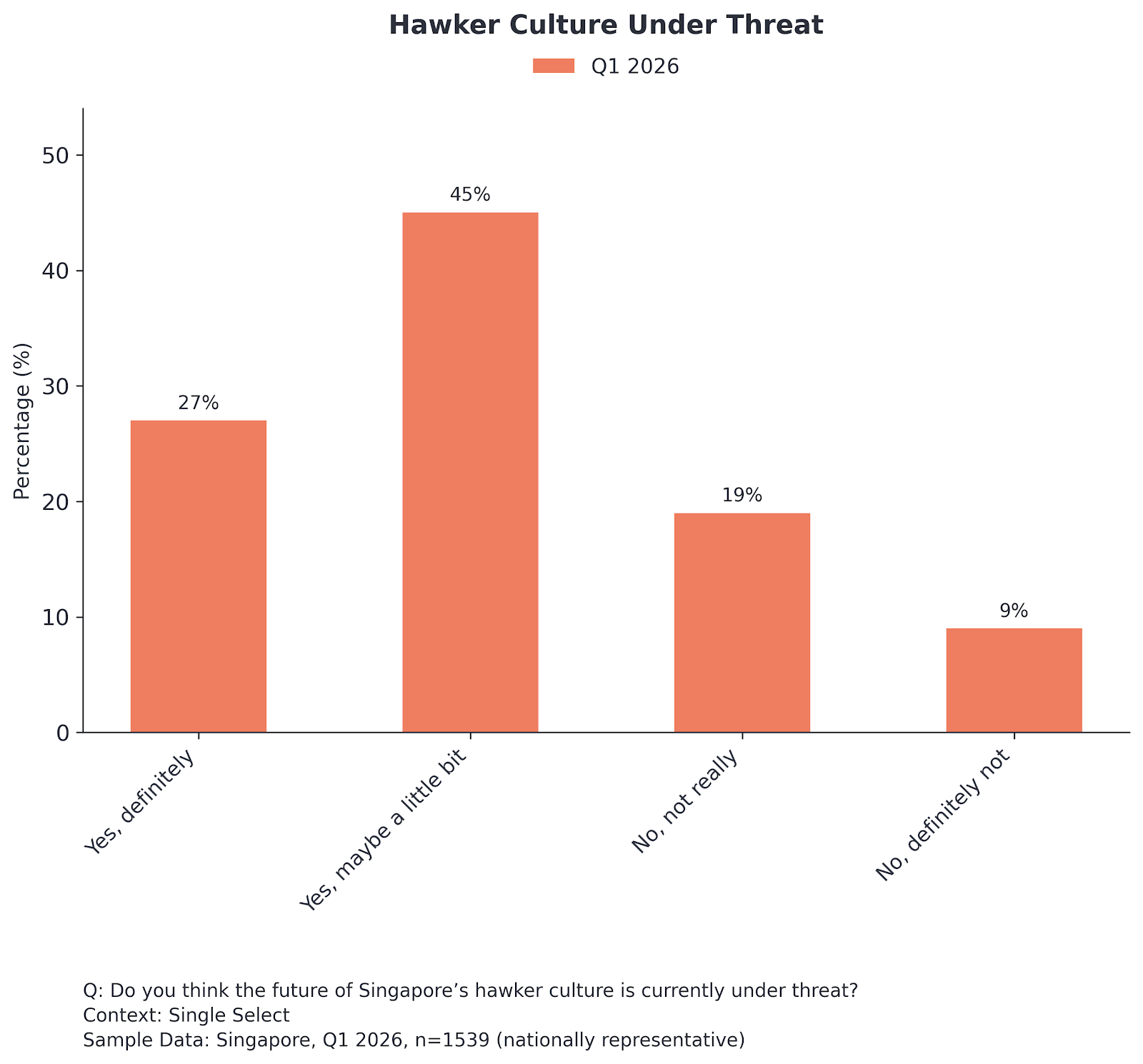
Despite its importance, the public mood regarding the future oh hawker culture is increasingly grim. 72% of Singaporeans believe hawker culture is currently under threat, with 27% describing that threat as "definite".
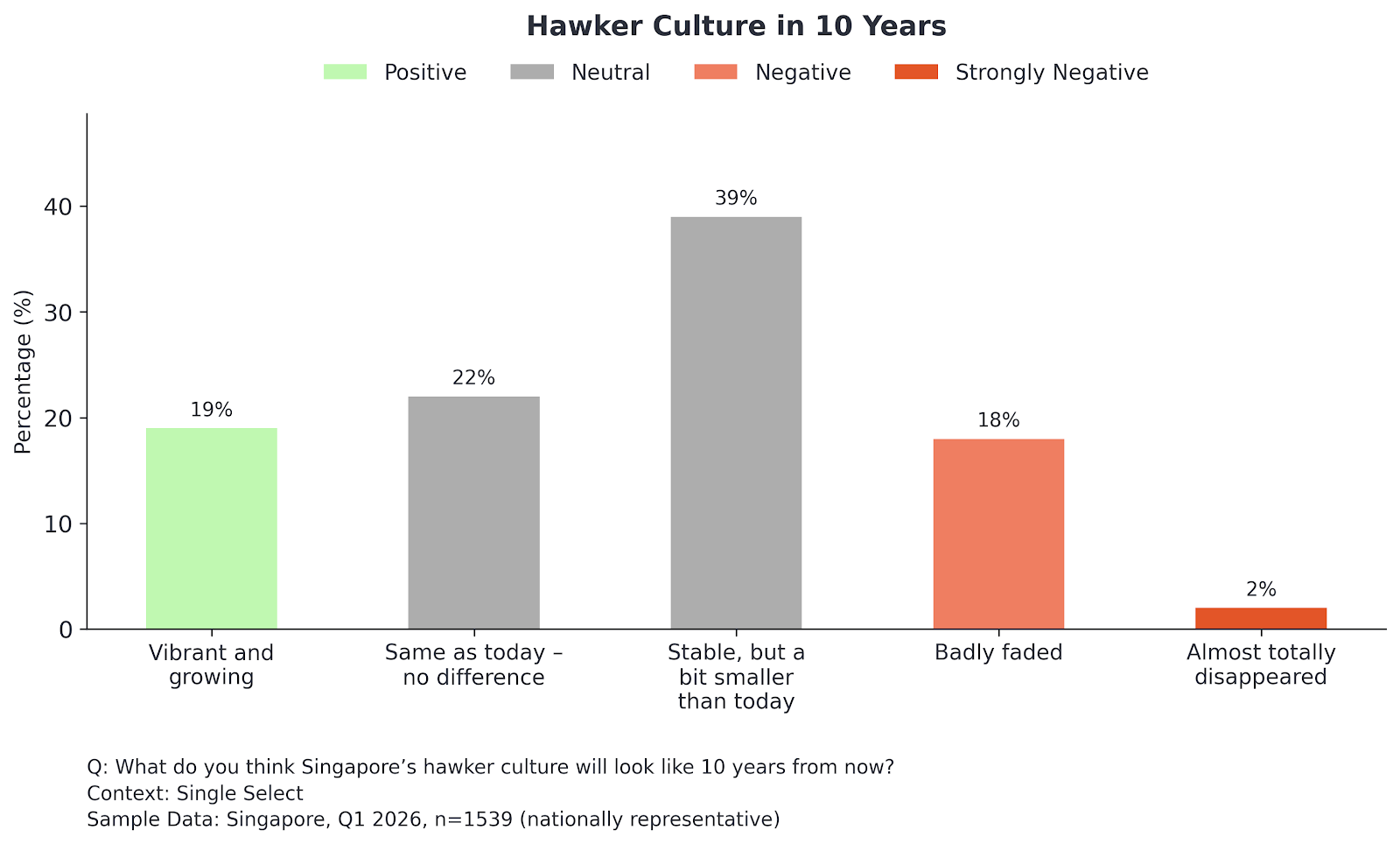
When asked to look a decade ahead, optimism is in short supply. Only 19% of the population expects to see a “vibrant, growing” scene by 2036. Instead, the consensus points toward a "slow fade", with 39% expecting a stable but smaller footprint and 20% predicting the culture will be either badly faded or almost entirely disappeared. This reflects a public that is clear-eyed about the fragility of their heritage in the face of modern pressures.
The Triple Threat: Costs, Ageing, and Energy
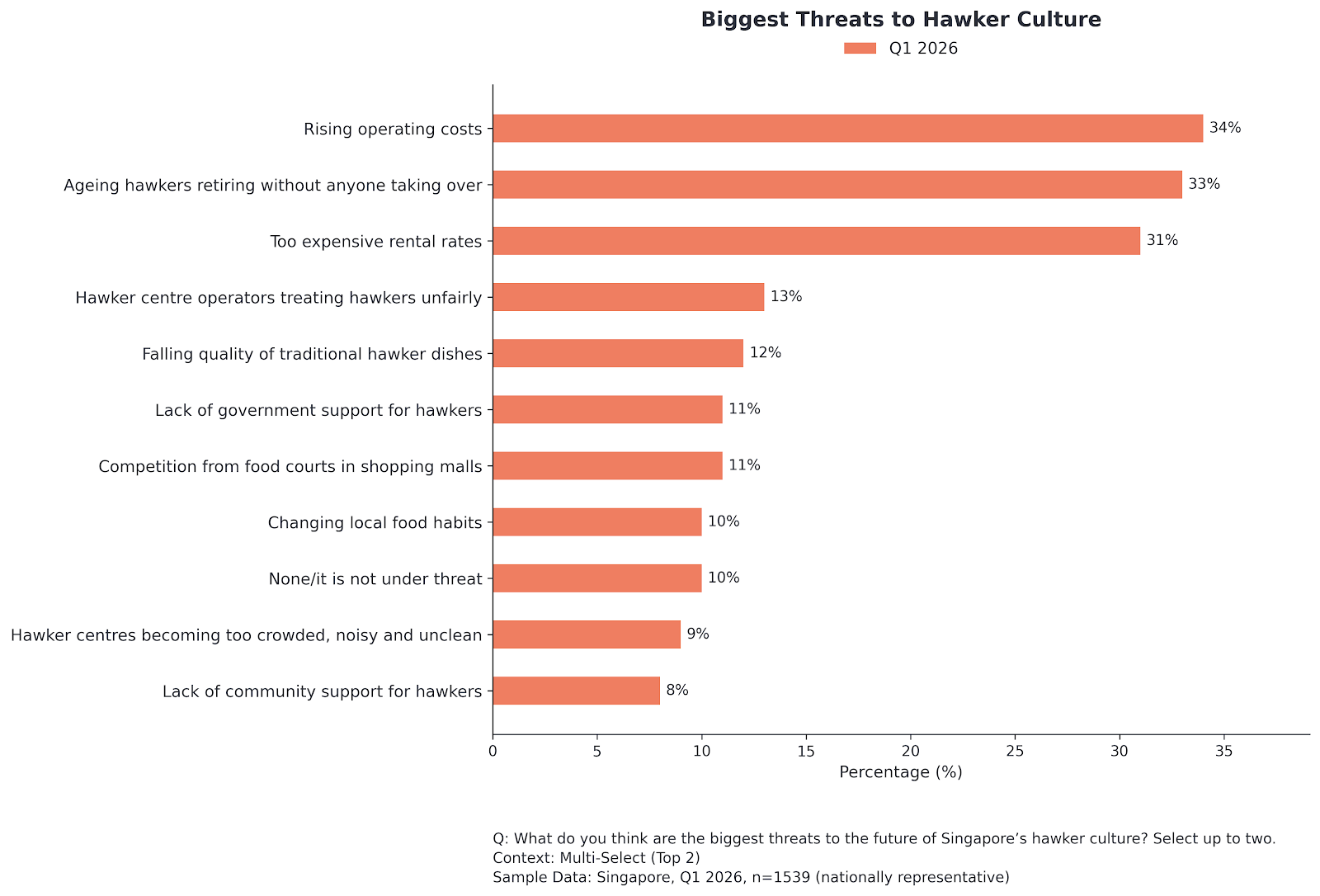
The crisis is being fuelled by a triple threat of factors that leave operators squeezed from every side. When identifying the primary dangers to the trade, Singaporeans point to:
Rising operator costs, exacerbated by the recent energy shocks following regional instability.
An ageing hawker population with no clear path for succession.
Expensive rents that make the trade unviable for many.
The immediate pressure of the energy crisis has made the traditional low-margin model nearly impossible to sustain. Yet, the public is caught in a painful paradox. While they recognise the threat, their own household budgets are so strained that 29% outright oppose hawkers raising their prices to make a better living. For many, the $5 meal is the last line of defence in a high-inflation era, and they are unwilling—or unable—to let it go. For many, the $5 meal is the last line of defence in a high-inflation era, and they are unwilling—or unable—to let it go.
“For many, the $5 meal is the last line of defence in a high-inflation era, and they are unwilling—or unable—to let it go.”
The Roadmap for Survival: Public-Backed Solutions
If policymakers are looking for a mandate to act, the SensingSG data provides some clues. Singaporeans recommend structural, systemic fixes to keep the stalls open.
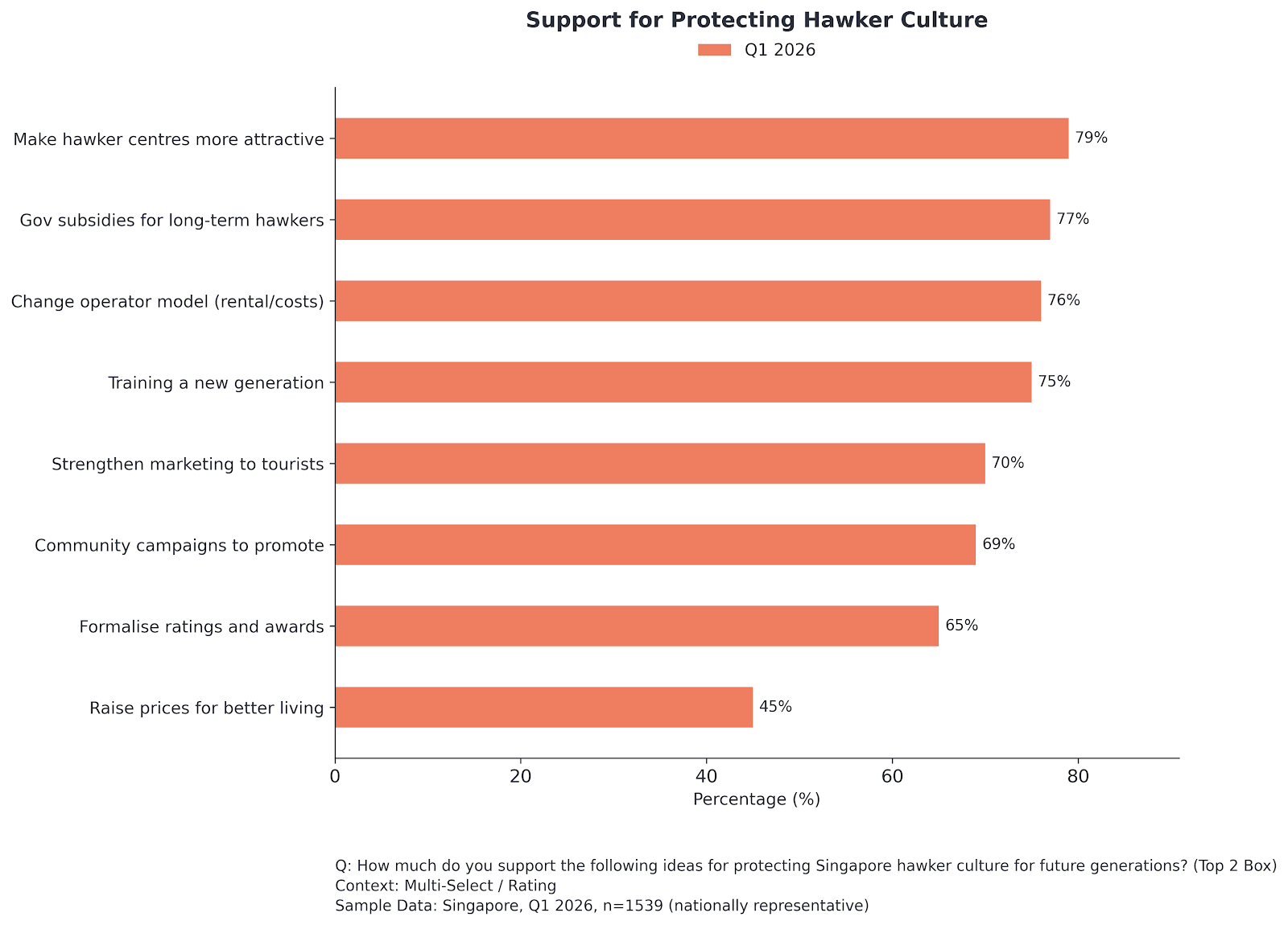
The most supported solutions for protecting the trade for future generations include:
Modernising the Physical Space (79% Support): A massive demand for better ventilation, cleaner facilities, and aesthetic facelifts to make centres attractive for the 2020s.
Direct Heritage Subsidies (77% Support): Overwhelming backing for rewards and subsidies specifically for long-term, veteran hawkers to ensure their skills remain in the ecosystem.
Changing the Operating Model (76% Support): A call to reform how centres are managed to relieve the crushing burden of rent and overheads.
Professionalising the Trade (75% Support): Training a new generation of "hawkerpreneurs" to run successful, viable businesses.
Crucially, 67% of the public believes that successful hawkers themselves should be helping to create policy, not just politicians. This signals a desire for "insider" intelligence to lead the way in saving the trade.
Implications for Policymakers
A Move to Infrastructure Status: Treat hawker centres as essential social infrastructure rather than commercial assets, pivoting away from the "social enterprise" management models that are failing to contain costs.
Direct Financial Intervention: Implement targeted subsidies for veteran hawkers to prevent the immediate loss of heritage skills during the current energy volatility.
Inclusive Governance: Establish a formal consultative council of active hawker business owners to co-design policy, ensuring that top-down decisions reflect frontline economic realities.
Conclusion
Singapore's hawker culture is at a breaking point. While it remains the soul of the nation's identity and a lifeline of its economy, it cannot survive on heritage alone. The data shows a public that is fearful of losing this heritage but many are equally anxious of the price hikes required to save it. One path forward is for a structural overhaul—one that takes hawkers for granted, but treats them as a critical professional partner in Singapore's future.
SensingSG is a quarterly community sentiment tracker by Blackbox Research. It is Singapore’s only large-scale, independent and publicly accessible insights dashboard on what matters most to Singapore. It can be accessed for free here.
The Q1 2026 SensingSG data was collected between 31 March and 13 April 2026. We surveyed n=1539 Singaporeans and PRs, in a nationally representative sample.
Blackbox is Asia’s leading provider of decision intelligence. Reach out to us to find out how our holistic range of market research solutions can help your organisation make decisions that matter.