
Singapore’s Economy Is Growing. So Why Does Getting Ahead Feel Harder?
SensingSG Q3 2026 Briefing
Blackbox Research - SensingSG Q1 2026 Key Findings
Blackbox’s latest SensingSG findings reveal a more demanding test of economic success as household expectations weaken and questions of affordability and opportunity return to the foreground.
Singaporeans remain confident in the country’s direction, but their optimism about household finances is weakening as affordability concerns rise. Blackbox’s latest SensingSG findings suggest that sustaining confidence will depend on whether strong economic growth at the national level produces greater financial security and clearer opportunities to progress at the personal one.
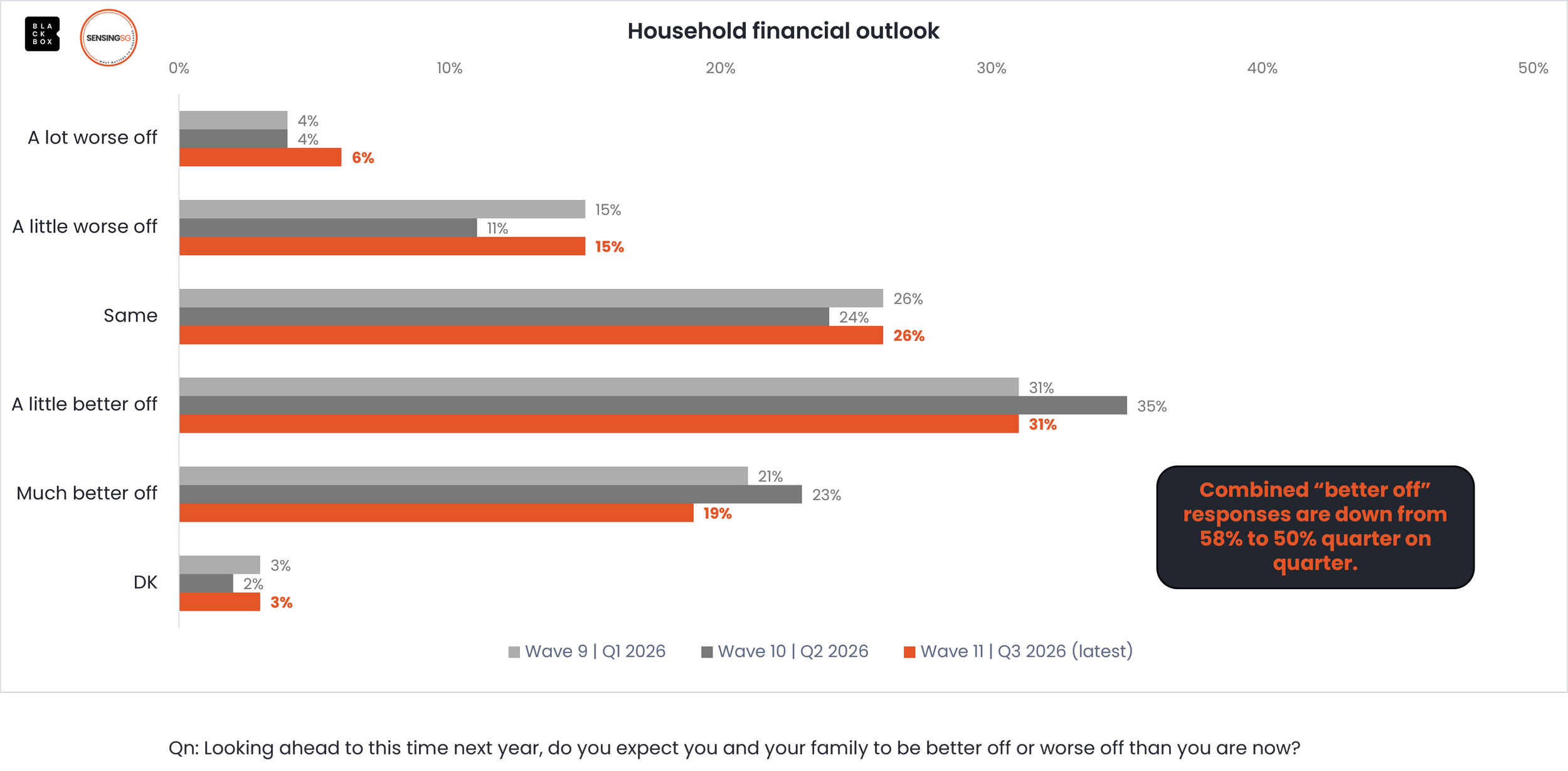
Estimates released on 14 October put Singapore’s third-quarter GDP growth at 5.4% year on year. By then, our September survey had already registered a retreat in household optimism: 51% expect their family finances to improve over the next year, down from 59% in Q2.
The recovery in expectations described in our previous quarterly briefing has lost momentum. For households, confidence depends on whether working hard still offers a credible route to a more comfortable and secure future.
Higher bills bring global disruption into the household budget
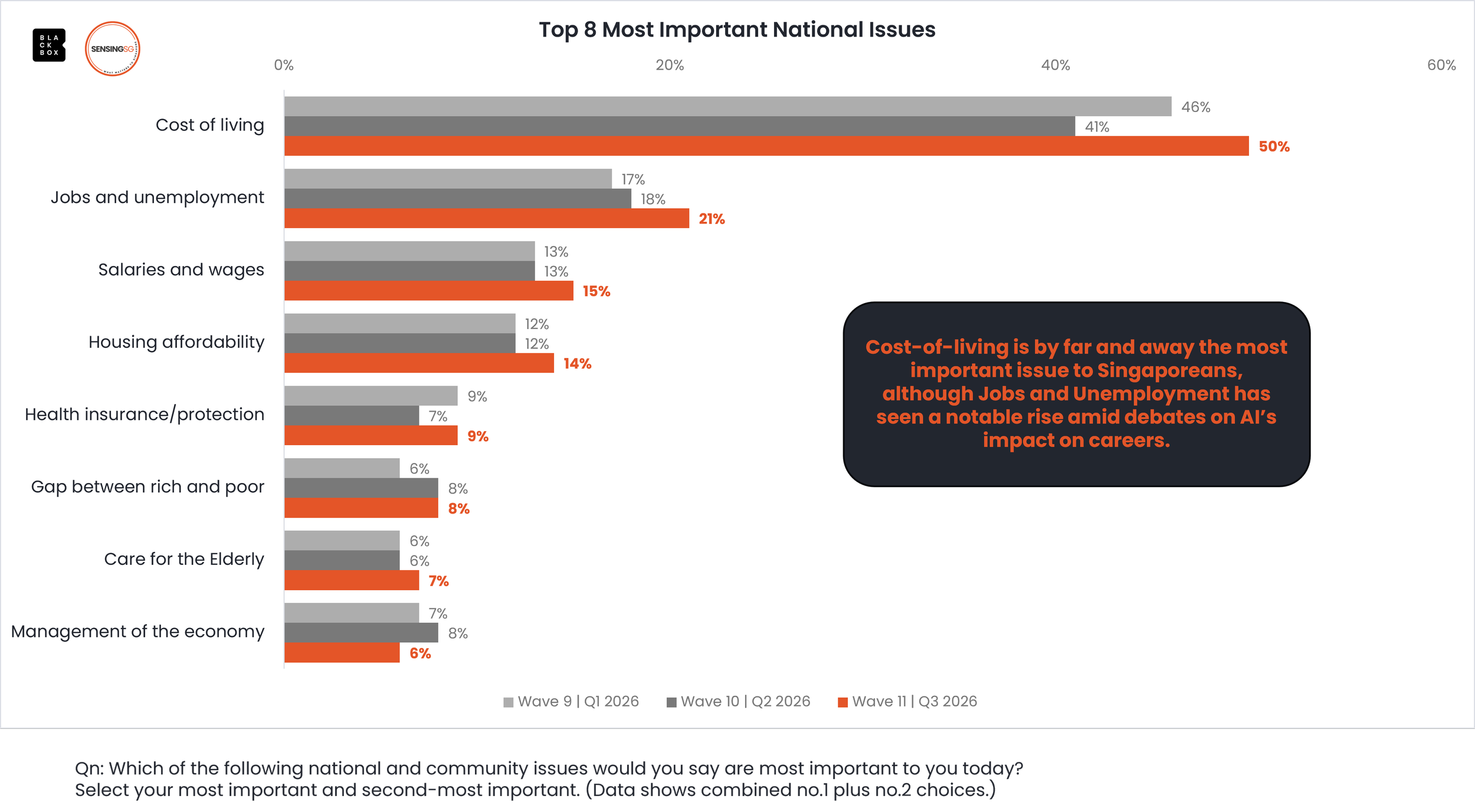
Half of respondents now place cost of living among their two most important national and community issues, up from 41% last quarter.
There is a tangible backdrop to that change. Regulated household electricity tariffs rose 17% for July to September, adding an estimated S$17.14 a month before GST to the average bill for a four-room HDB household. The increase reflected higher natural-gas costs following the Middle East conflict.
August headline inflation reached 2.3%, with food and other everyday costs continuing to rise. Global disruption is being experienced through recurring household expenditure, leaving families to adjust the same budget repeatedly.
For many, Singapore’s economy is growing but the space to enjoy it is feeling smaller.
Career confidence is weakening even while unemployment remains low
Rising bills are easier to absorb when the next pay rise or career move feels dependable. But work has become a less reassuring part of the calculation.
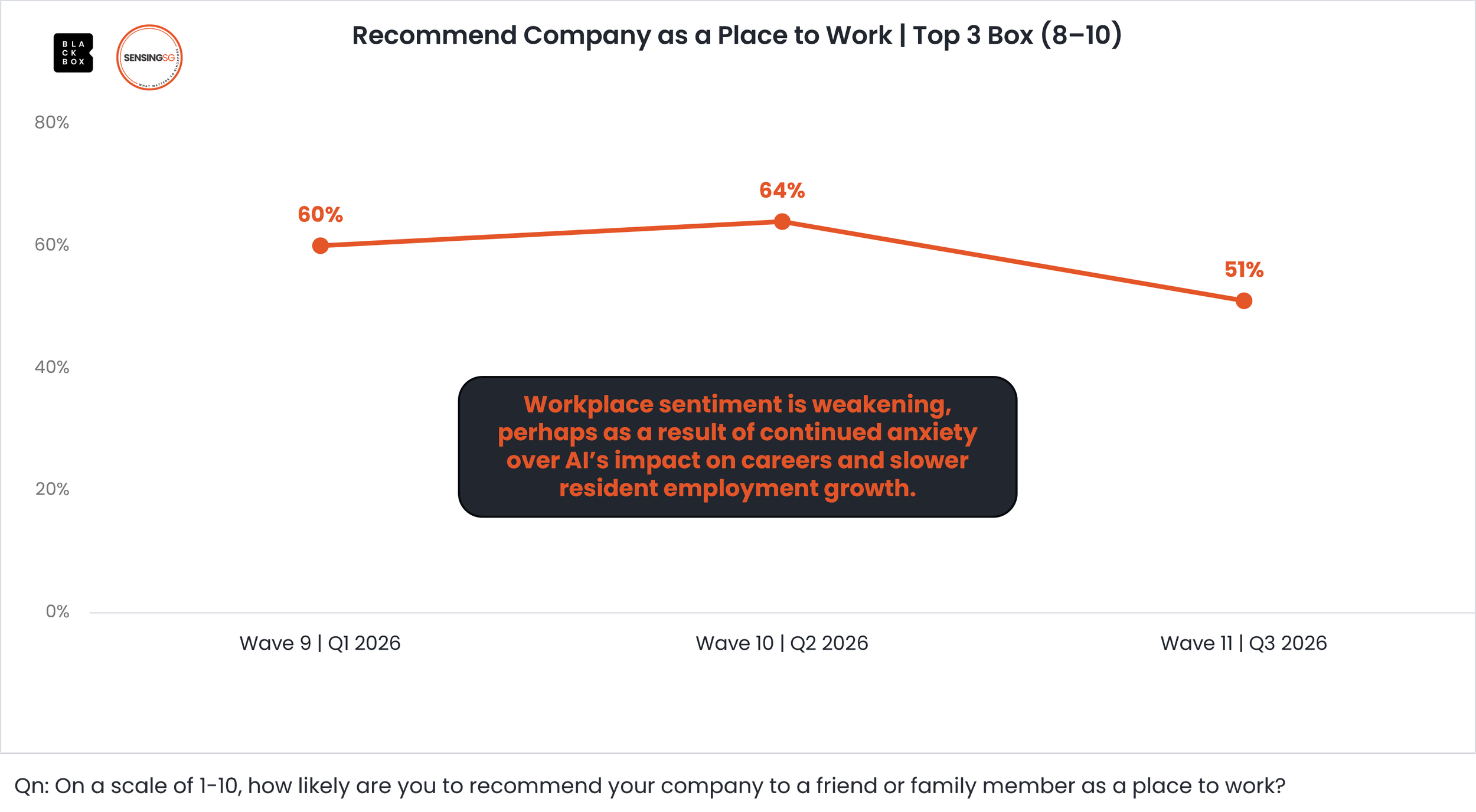
Among employees, 51% gave their organisation a recommendation score of at least eight out of ten, down from 64% in Q2. That is a substantial weakening in how positively people view their workplace.
MOM’s September labour-market report provides relevant context. Unemployment remained low, but resident employment growth slowed, retrenchments increased and the proportion of retrenched residents finding another job within six months fell. Professional vacancies also declined in financial services and information and communications.
For someone with a mortgage and dependents, the possibility of a longer job search can change the household budget today. A low national unemployment rate offers limited comfort when the more personal question is how replaceable your income would be.
AI makes the picture more complicated. MAS identifies technology-related activity as a major growth driver, while our previous SensingSG wave found 52% concerned about AI’s effect on their career prospects. The same transformation is likely to expand the economy while leaving workers unsure where they will fit.
The sandwich generation is facing several pressures at once
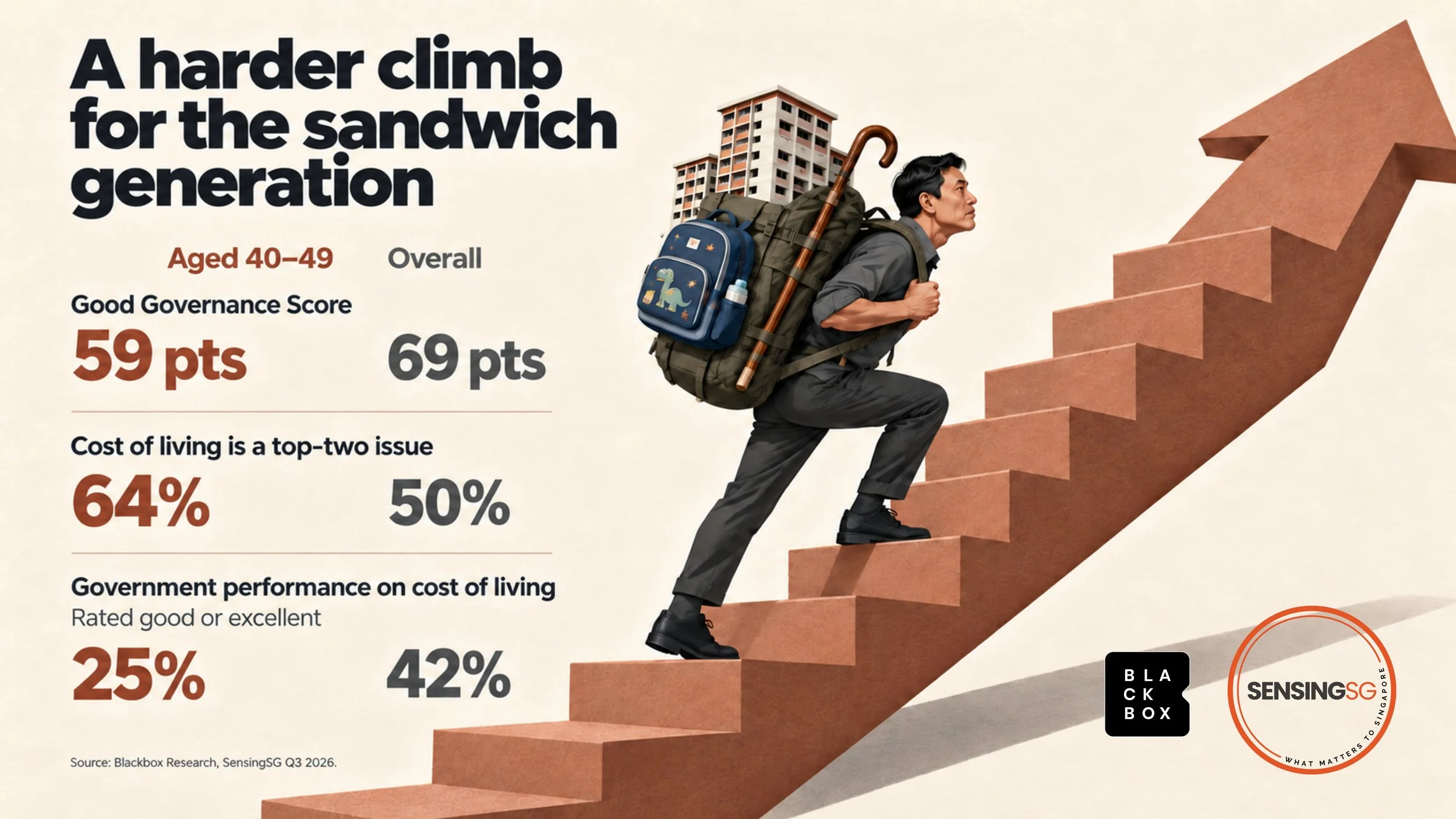
The findings for people aged 40–49 bring these concerns into sharper focus. In this group, 64% identify cost of living as a top-two issue, compared with 50% overall. Only 25% rate government performance on it good or excellent, against 42% overall.
For many at this stage, housing commitments coincide with children’s expenses, support for ageing parents and the need to prepare for retirement. It is also a point at which a career setback can be most expensive to absorb. A household may have established earnings and substantial obligations, with limited scope to reduce either its responsibilities or its dependence on continued employment.
These overlapping commitments offer a plausible explanation for the intensity of concern. Support needs to account for how much room families have after meeting their obligations, alongside what they earn.
Strong governance must still deliver at the dining table
Singapore retains a substantial reservoir of confidence. Eighty-two per cent believe the country is heading in the right direction (albeit down by 7pts since the beginning of the year). For perspective, international polling earlier this year recorded right-direction scores of 62% in Thailand, 40% in the US, 21% in Great Britain and a meagre 10% in France.
SensingSG’s government-service measures also remain positively rated, with respectful treatment and problem resolution improving across almost all measured areas this quarter.That foundation deserves recognition, but it also needs frequent replenishing. The Good Governance Meter fell from 73 to 69, while good or excellent ratings on cost of living dropped from 51% to 42% and on the rich–poor gap from 56% to 46%.
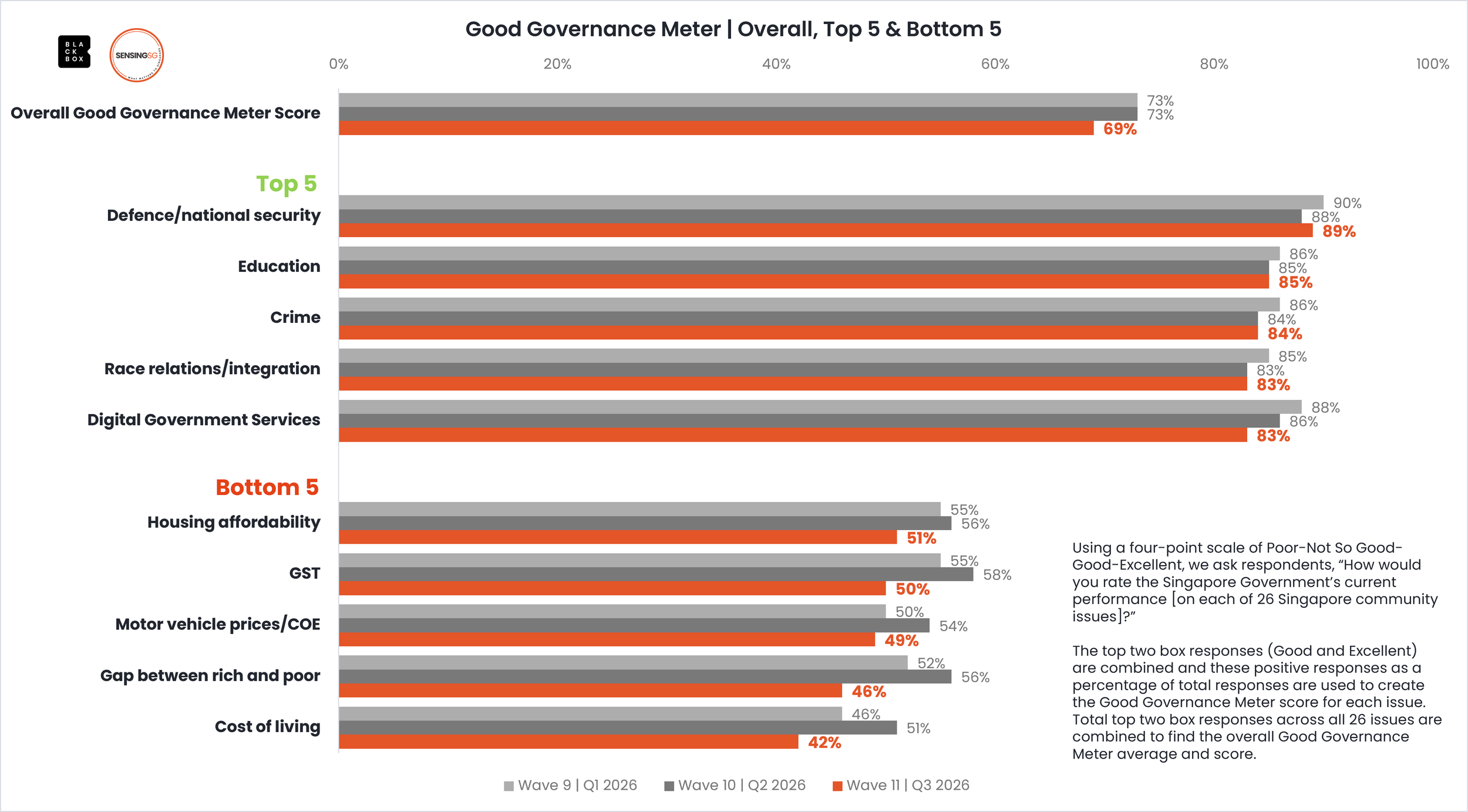
Decades of progress have made national growth an expectation for many Singaporeans. The more immediate question around the dining table is whether their own household is moving forward and receiving a fair share of that progress.
September’s political-salary debate gave questions about remuneration and fairness particular prominence. Against a more cautious household mood, it made the distribution of economic gains especially visible. Broader political and institutional leadership approval also softened over the quarter.
The lesson here is that high administrative competence earns passive credit. Feeling financially secure, and believing your effort will still take you somewhere, are separate tests.
The next growth story needs a household dividend
The Government is spending real money to ease the pressure. Eligible citizens received S$400–S$600 through the enhanced Cost-of-Living Special Payment in September. That support helps with the immediate arithmetic.Affordability for many now goes beyond inflation and external shocks. As Singapore has become wealthier, expectations of what a household income should provide have shifted: more opportunities for children, greater comfort and convenience, and a retirement that maintains an accustomed standard of living. Alongside this, longer lives, competing demands on “sandwiched” parents, and uncertainty over how a career can be managed are stretching what families feel they need to build and protect.
What once felt like getting ahead has morphed into the cost of keeping up.
The pressure comes not just from higher prices but, equally, the changing expectations against which families judge whether they really have enough.
Restoring confidence therefore means helping households see a realistic path to the life they are working towards. Earnings need to leave room beyond essentials, and career transitions need to lead somewhere worth going.
Businesses have responsibilities here as employers and providers of everyday goods and services. Productivity gains should open credible routes to better work. Clear prices and dependable value matter more when customers are watching every recurring expense. Policymakers should judge success partly by whether families can meet today’s obligations while planning with confidence for the years ahead.
Singapore’s real test now is whether people who believe the country is moving forward also believe they can move forward with it.
Blackbox in Action: SensingSG and how we connect national sentiment with household experience
SensingSG, Blackbox Research’s independent quarterly community tracker, brings household finances and expectations together with issue priorities and assessments of government performance. This wave shows why the combination matters: strong confidence in Singapore coexists with weaker household optimism and greater affordability concern. For public policy and business intelligence, that distinction helps identify where economic progress is losing its reassuring effect.
Explore the free SensingSG dashboard for the findings and trends.
The Q3 2026 SensingSG survey was conducted online from 24–30 September among 1,533 Singapore citizens and permanent residents aged 21 and above. The workplace recommendation measure covers 1,295 employees. Quarter-on-quarter comparisons are with Q2 2026.