
Did Your Campaign Really Work?
The 5 Metrics That Matter Most in Uplift Analysis
Blackbox has been active in surfacing insights and designing measurement strategy for campaign effectiveness across Asia for years. At the end of every campaign, there is an uncomfortable question waiting to be answered: did it work? Dashboards today offer no shortage of metrics, but it is increasingly easy to mistake activity for impact. A campaign can look successful on the numbers and still fail to show whether it genuinely changed behaviour, created real value, strengthened the brand, or justified further investment. Answering the question properly means asking five smaller ones in sequence: did people change? Did they act? Did we create value? Was it efficient? Did we strengthen the brand? Each builds on the last, and each reveals something the others cannot. This article maps that journey and the five metrics behind it.
Before the Five Questions: Can We Trust the Results?
There is a step that gets skipped more often than it should. Before drawing any conclusions from campaign data, marketers need to establish that observed differences are real rather than the product of natural variation. Statistical significance is not a performance metric. It is a reliability check, and without it, the five questions that follow cannot be answered with confidence.
In Asia, where campaigns often run across multiple markets with different audience profiles and purchase cycles, this matters more than most teams acknowledge. A result that reaches significance in Singapore but not in Thailand is telling you something important about where the campaign's effects were real and where they weren't. Factors like sample size, flight duration, and audience variability all affect significance levels. Failing to reach significance doesn't mean a campaign failed. It means the evidence isn't yet strong enough to act on, which is a meaningfully different conclusion.
Once confidence in the data has been established, the more revealing questions begin.
Stage A: Audience Impact
Metric 1: Incremental Uplift Percentage

This is where uplift analysis starts. Incremental uplift measures the behavioural difference between people exposed to a campaign and a properly constructed control group who were not. It answers the first and most fundamental question: did the campaign genuinely influence how people think or behave, or did those outcomes reflect existing demand that was going to materialise anyway?
This distinction has real commercial consequences. Many campaigns claim credit for activity they did not create. A brand running a retargeting campaign may generate strong conversion numbers from people who had already decided to buy, and the campaign simply appeared in their feed on the way to checkout. Without a control group, that credit is never questioned. Incremental uplift removes it.
The common mistake at this stage is assuming that a larger uplift percentage always signals a better-performing campaign. A 20% uplift across a narrowly targeted audience of 10,000 people may deliver less total value than a 6% uplift across a broad exposed group of 500,000. The percentage is the signal. The strategic significance depends on scale, audience quality, and what specifically changed.
For Blackbox, this is where measurement moves beyond a dashboard readout. Uplift should be interpreted by market, audience, channel and campaign objective. A modest uplift among a commercially valuable segment may matter more than a larger uplift among an audience the brand cannot convert or retain. The purpose of the metric is not simply to confirm that something moved. It is to identify whether the campaign created a real signal worth acting on.
The answer to this first question sets the foundation for everything that follows. If the campaign did not move the intended audience outcome, the remaining metrics need to be interpreted with caution.
Stage B: Behavioural Impact
Metric 2: Incremental Conversions

Behavioural change is necessary but not sufficient. The second question is whether that shift translated into tangible action. Incremental conversions measure the additional purchases, sign-ups, or target actions that occurred specifically because of campaign exposure, and that would not have occurred otherwise.
The word "incremental" does a lot of work here. In most campaigns, a significant proportion of recorded conversions come from consumers who were already on a path to acting. They might have searched for the brand, visited the website, or added a product to their basket before the campaign ever reached them. Attributing those conversions to the campaign overstates its impact and, in turn, distorts the investment decisions that follow.
In Blackbox's The Next Leap for E-Commerce in Southeast Asia study, drawing on over 25 hours of expert interviews across Malaysia, the Philippines, and Vietnam, we found that consumer confidence in digital commerce was rising faster than the operational infrastructure designed to support it. The Philippines led on confidence scores, yet structural logistics gaps continued to suppress actual conversion. For campaign teams, the implication is direct: market momentum can make campaigns look more effective than they are. When a category is growing rapidly, almost any campaign will generate conversion volume. Incremental measurement is the only way to isolate what the campaign itself produced from what the market was going to deliver regardless.
Volume matters. But volume without causal attribution is, ultimately, just noise with a good headline.

Stage C: Commercial Impact
Metric 3: Incremental Revenue

Conversions confirm that people acted. Incremental revenue answers whether those actions created commercial value. This is the metric that connects marketing activity to business performance in the language that executive teams and finance functions actually use, and it is usually the metric that determines whether a campaign budget gets renewed.
The mistake most teams make here is treating conversion volume and revenue as though they are the same signal. They are not. A campaign that generates a high volume of incremental conversions from low-average-order customers may produce less revenue than a more targeted campaign that influenced fewer but higher-value decisions. Measuring both together reveals the quality of the commercial impact, not just its quantity.
Incremental revenue also establishes the baseline for any meaningful ROI calculation. Without it, return on marketing investment is largely theoretical, built on assumptions about conversion value rather than measured outcomes. With it, marketing teams have the evidence they need to defend investment levels, model future spend, and make resource allocation decisions with real confidence.
The decision this metric enables is whether the campaign deserves more investment, different investment or less investment. A campaign that drives incremental action but limited incremental revenue may still be useful, but its role needs to be understood correctly. It may be better suited to acquisition, trial, remarketing or lower-value audience development than to direct commercial growth.
The third question is where marketing begins to speak the same language as the boardroom.
Stage D: Efficiency Impact
Metric 4: Incremental Cost Per Acquisition (iCPA)

Creating value is necessary. Creating it sustainably is what makes a campaign scalable. Incremental Cost Per Acquisition measures the cost required to generate each incremental customer or conversion attributable to the campaign, and it is the metric that most honestly determines whether a campaign can be grown.
This is often where the picture changes most dramatically. A campaign that generated strong incremental revenue may still represent poor value if the cost of acquiring each of those customers exceeds their expected lifetime value. Conversely, a campaign with a modest headline conversion count may prove to be among the most efficient investments a marketing team has made, once the iCPA is placed alongside margin and retention data.
One misconception is worth addressing directly: the lowest iCPA does not identify the best campaign. The cheapest customers are not always the most valuable customers. iCPA should sit alongside average order value, retention rates, and category margin profiles before any conclusion about efficiency is drawn. The aim is not minimising acquisition cost in isolation. It is maximising the value returned per pound or dollar invested.
In Blackbox's Retail Realities report, we identified that Singapore shoppers operate within a 65/35 online-offline equilibrium, a figure that only becomes strategically meaningful when examined alongside its behavioural drivers: digital fatigue, tactile preference, and the growing appeal of suburban retail formats built around convenience. For campaign planners, the lesson is the same. An iCPA figure that looks competitive in isolation may tell a different story once channel mix, audience quality, and purchase context are factored in. Efficiency without context can be as misleading as volume without attribution. The decision this metric enables is whether the campaign can scale profitably, and under what conditions.

Stage E: Brand Impact
Metric 5: Brand Impact Lift

The first four questions are about what happened. This one is about what it means for everything that follows. Brand Impact Lift measures the incremental shift in brand perceptions among people exposed to the campaign: awareness, consideration, preference, purchase intent, message recall, and key brand associations.
This metric tends to receive less attention than it deserves in post-campaign reviews, partly because its value is harder to express in short-term ROI terms. But for brands competing across Asia's crowded consumer categories, where consideration windows can be long and trust accumulates slowly, brand impact is often the most strategically significant output a campaign can generate. A campaign that improves short-term conversion while eroding consideration among the broader audience is, in effect, borrowing future revenue against present results.
Brand-building campaigns are routinely judged against sales metrics they were never designed to move, and then dismissed as underperforming when the numbers don't materialise. The right framework evaluates them against the perceptual outcomes they were built to achieve. Did spontaneous awareness shift? Did consideration improve within the target segment? Did the campaign reinforce the brand's desired positioning?
A campaign that fails on immediate conversion but measurably improves purchase intent among a high-value audience segment has created real commercial value; it simply materialises on a different timeline. Organisations that never measure brand impact systematically underinvest in the marketing activity that builds enduring competitive advantage.
The decision this metric enables is whether the campaign strengthened future demand, not just immediate response.
Five Questions → One Complete Picture

Each of the five questions answers something different. Incremental uplift shows whether the intended audience outcome shifted. Incremental conversions show whether that shift produced action. Incremental revenue shows whether the action created commercial value. iCPA shows whether that value was produced efficiently. Brand Impact Lift shows whether the campaign strengthened future demand.
The real value comes from reading the five metrics together.
Most post-campaign reviews answer one or two of these questions, usually the ones that look best in a slide. That is campaign reporting. Answering all five, together and in sequence, is campaign intelligence. The difference matters because it determines whether teams are learning from campaigns or just documenting them. For marketing leaders managing multi-channel programmes across Asia’s diverse and fast-moving consumer markets, a structured measurement framework is as important as a strong creative strategy. Campaigns that are well-executed but poorly measured tend to teach organisations the wrong lessons. Campaigns that are both well-executed and rigorously measured build the institutional knowledge that compounds over time.
Where Blackbox Adds Value
Blackbox’s Campaign Uplift & Brand Impact service is built for this exact challenge: helping marketing leaders move from campaign reporting to decision-ready campaign intelligence. That means looking beyond topline performance and asking what the campaign actually caused, where the effect was strongest, which audiences responded, what value was created, whether the investment was efficient and whether the brand was strengthened for future growth.
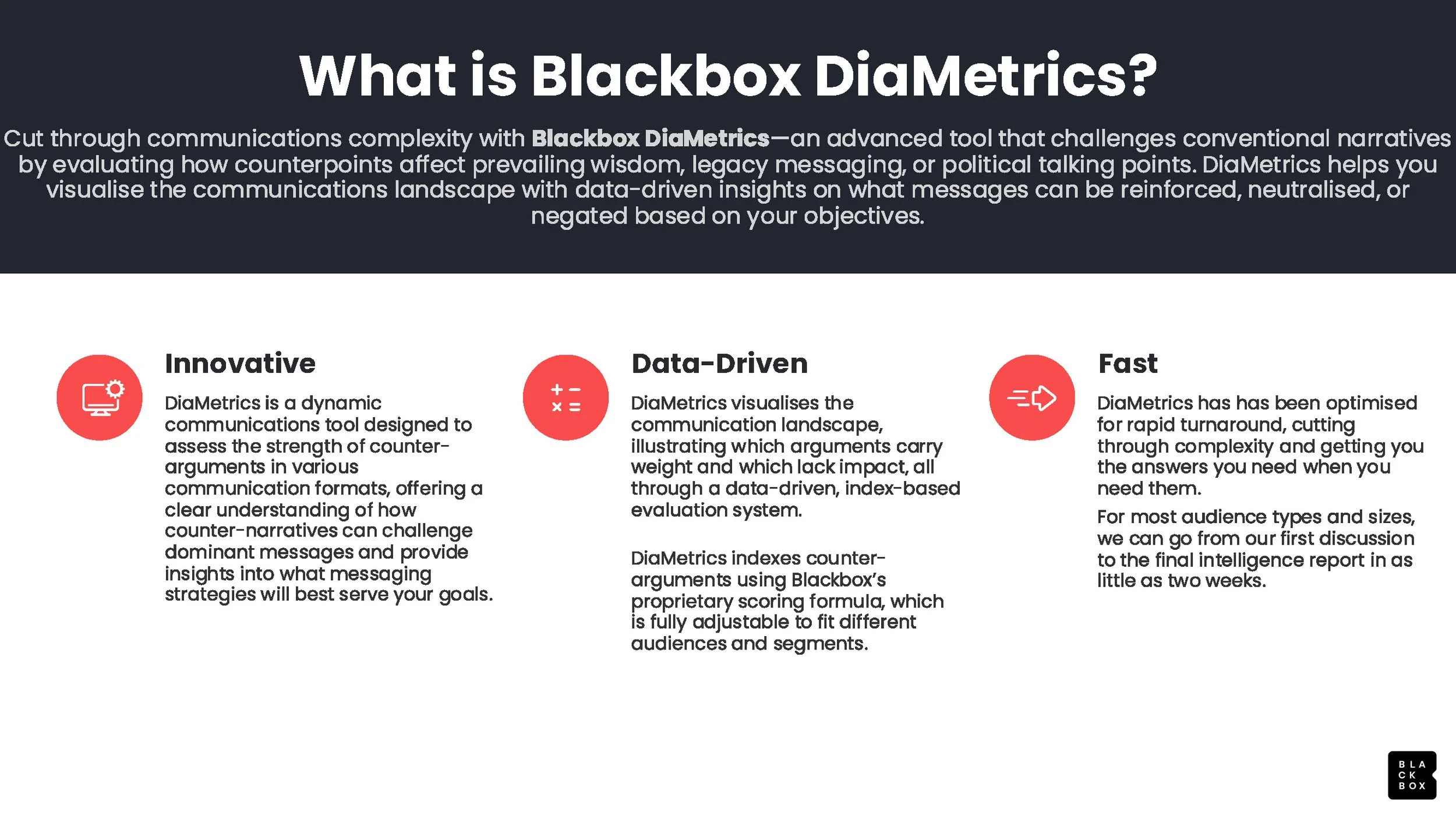
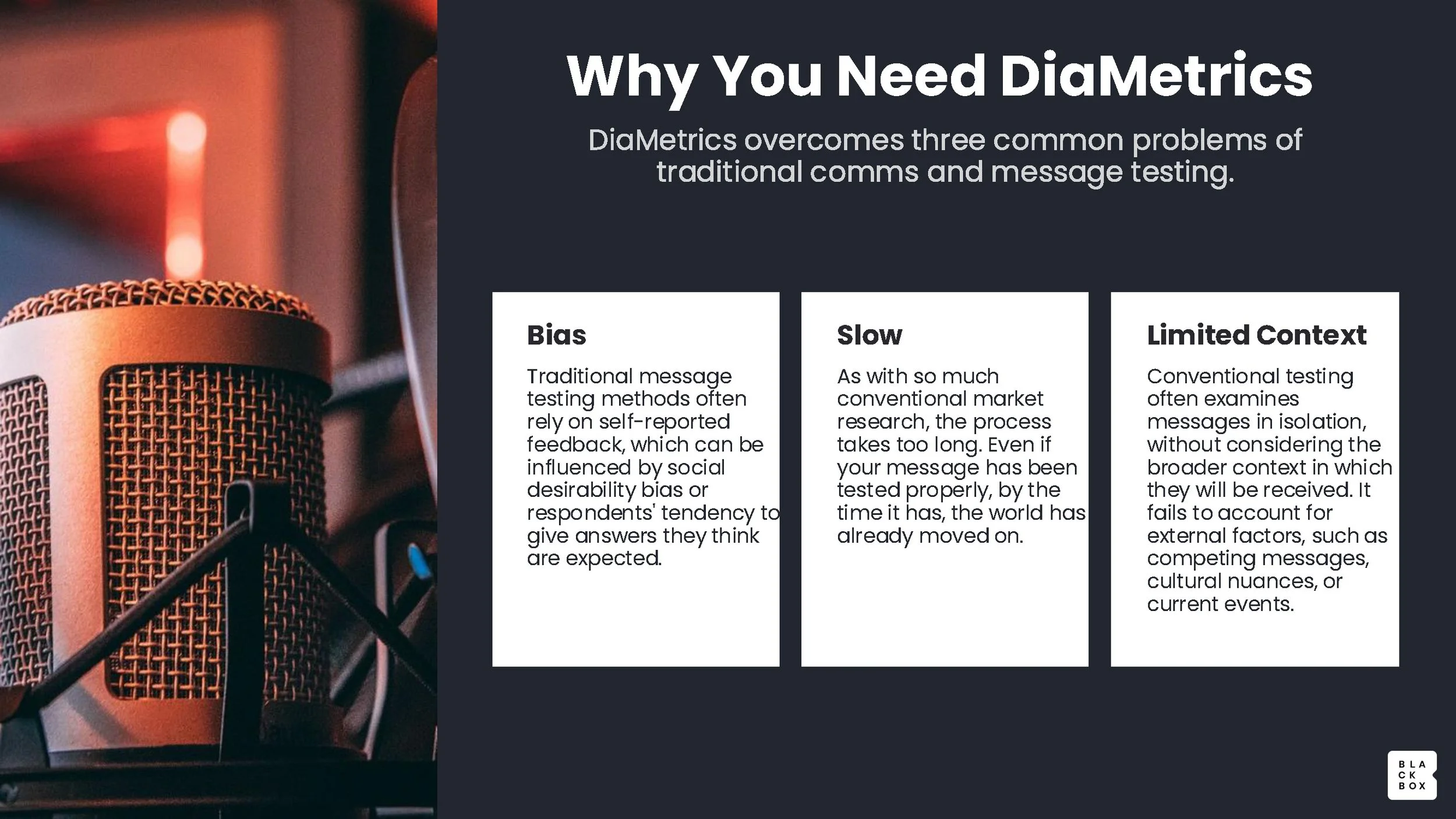
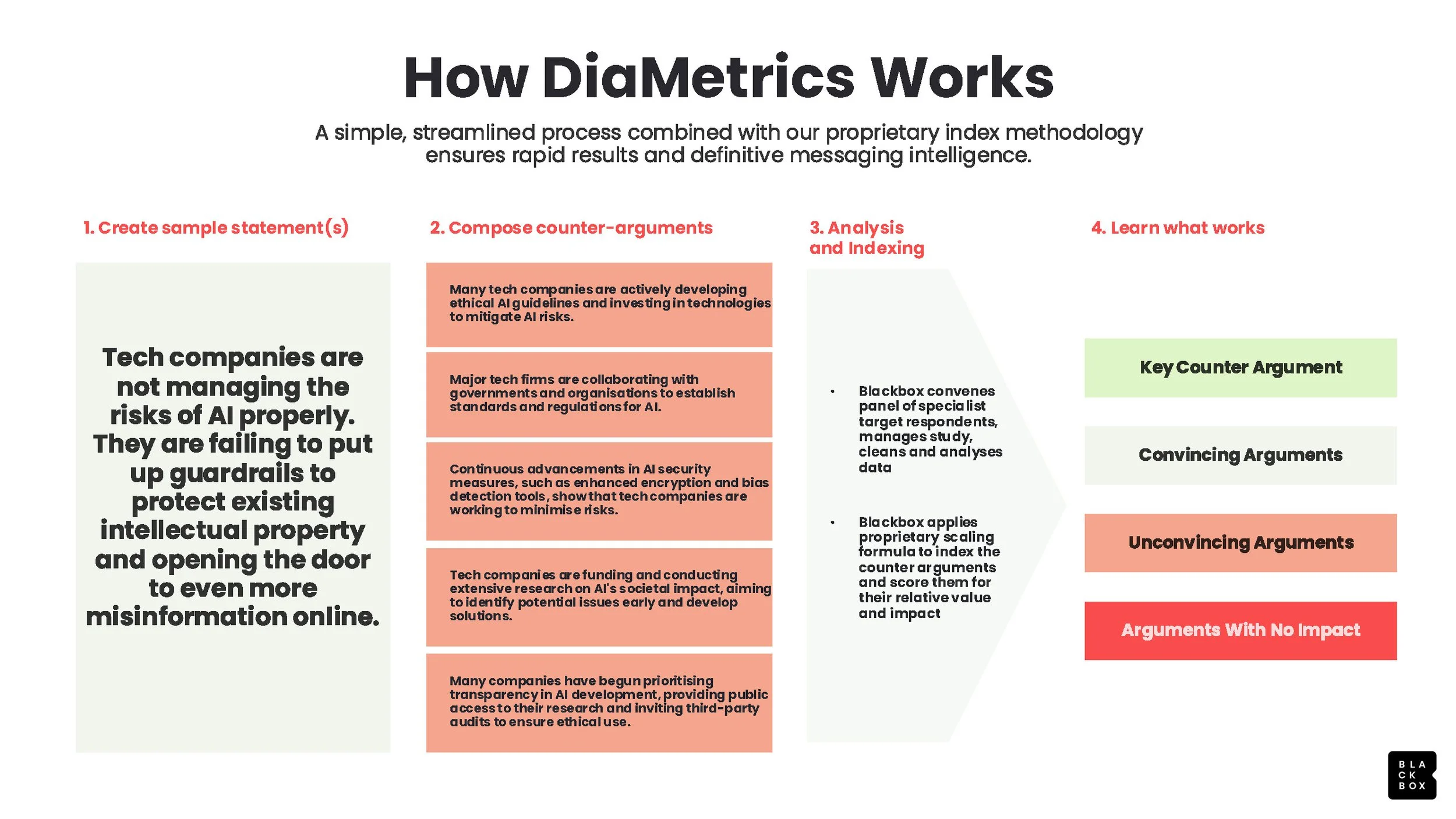
This is also where DiaMetrics, Blackbox's advanced communications testing tool, adds a meaningful upstream layer. DiaMetrics evaluates how messages hold up against counterpoints and competing narratives before a campaign goes to market, helping brands identify which claims can be reinforced and which may be vulnerable to challenge. Used before launch, it sharpens the hypotheses that uplift analysis is later asked to validate. The five questions become more answerable when the messaging that drives them has been stress-tested against the communications landscape it will actually face.





The Question Behind the Questions
"Did the campaign work?" is rarely a question about whether the campaign performed. It is a question about whether the organisation has the measurement infrastructure to know. The marketers who can answer it confidently, and who can answer all five of the deeper questions that sit beneath it, are the ones who make better investment decisions, build stronger cases for their budgets, and improve more consistently from one campaign to the next. Blackbox's Campaign Uplift & Brand Impact service exists for that exact purpose: to give marketing leaders the rigorous, multi-dimensional measurement that turns campaign data into strategic intelligence. If your next post-campaign conversation needs to go further than your last one, that is the conversation we are here to have.
Ready to measure what really matters?
Reach out to Blackbox for a no-obligation discussion on how our Campaign Uplift & Brand Impact measurement service, and our suite of insights and strategy solutions, can help you find an edge in Asia’s competitive digital economy.